When you become a parent, your perspective on the future changes instantly. It’s no longer just about your goals; it’s about ensuring that if the unthinkable happens, your children’s lives remain as stable as possible. Life insurance is the ultimate safety net, but the biggest question parents face in 2026 isn’t if they need it—it’s how much.
The old “10 times your salary” rule is a starting point, but it often falls short of covering the true cost of raising a child today. Here is how to calculate your real number and ensure your family is fully protected.
1. The DIME Method: A Realistic Framework
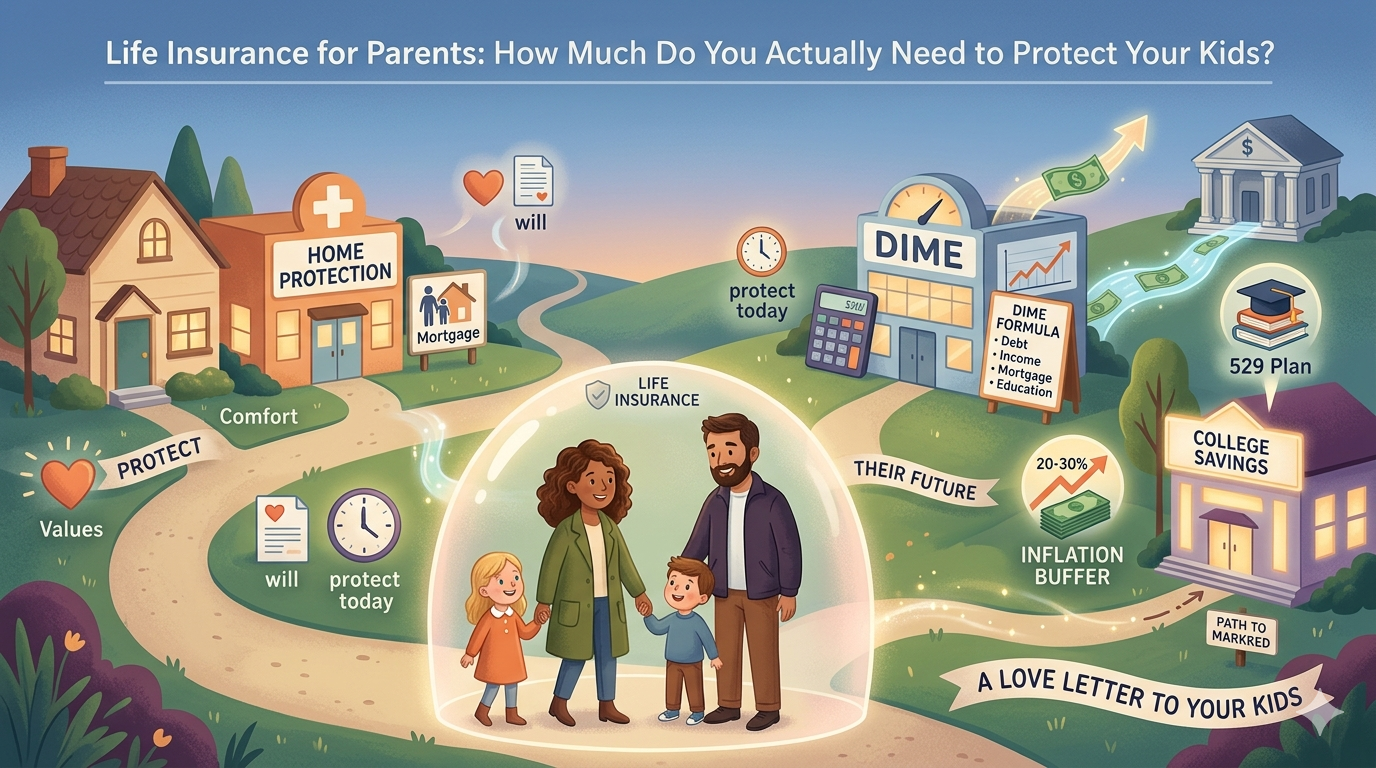
To get a precise figure, many financial experts in 2026 recommend the DIME formula. This acronym helps you break down your family’s actual financial needs into four clear categories:
-
Debt: Calculate all outstanding debts, excluding your mortgage. This includes car loans, credit cards, and personal loans.
-
Income: How many years of your salary would your family need to survive? Multiply your annual income by the number of years until your youngest child turns 18 or 21.
-
Mortgage: One of the greatest gifts you can leave is a paid-off home. Include your remaining mortgage balance in your total.
-
Education: With tuition costs rising, factor in the future cost of college for each of your children.
2. Don’t Forget the “Stay-at-Home” Factor
A common mistake families make is only insuring the primary breadwinner. If one parent stays home or works part-time to manage childcare, their “economic value” is immense.
Consider the cost of hiring help to cover everything a stay-at-home parent does: childcare, transportation, meal prep, and household management. In 2026, the market rate for these combined services can easily exceed $60,000 annually. If the stay-at-home parent passes away, the surviving parent will likely need to pay for these services to continue working, making life insurance for both parents a necessity.
3. Term vs. Whole Life: Which Fits 2026 Parents?
For most parents, Term Life Insurance remains the most cost-effective choice. It provides coverage for a specific period (usually 20 or 30 years)—essentially the window of time when your children are most financially dependent on you.
Whole Life Insurance, while it builds cash value, is significantly more expensive. In 2026, many parents prefer to buy a high-value term policy and invest the difference in premiums into a 529 College Savings Plan or a diversified portfolio. This “buy term and invest the rest” strategy often yields better long-term flexibility for growing families.
4. Accounting for Inflation and “Lifestyle Creep”
In 2026, we are seeing the long-term effects of inflation on everyday goods. Your life insurance policy from five years ago might not have the same purchasing power today. It is wise to add a 20-30% “inflation buffer” to your final DIME calculation.
Furthermore, consider your children’s extracurriculars. If your child is on track for competitive sports, music lessons, or specialized tutoring, ensure your policy covers the continuation of those activities. Stability for an grieving child often comes from maintaining their normal routines.
5. Review and Adjust
Life insurance is not a “set it and forget it” task. You should review your coverage during major life milestones:
-
The birth of a new child.
-
Buying a larger home.
-
A significant promotion or career change.
-
Starting a college fund.
The Bottom Line: Life insurance isn’t about the payout; it’s about the peace of mind. Knowing that your children can stay in their home, attend the college of their choice, and have their basic needs met allows you to focus on the joy of parenting today. Take an hour this week to run the numbers—your family’s future is worth the time.