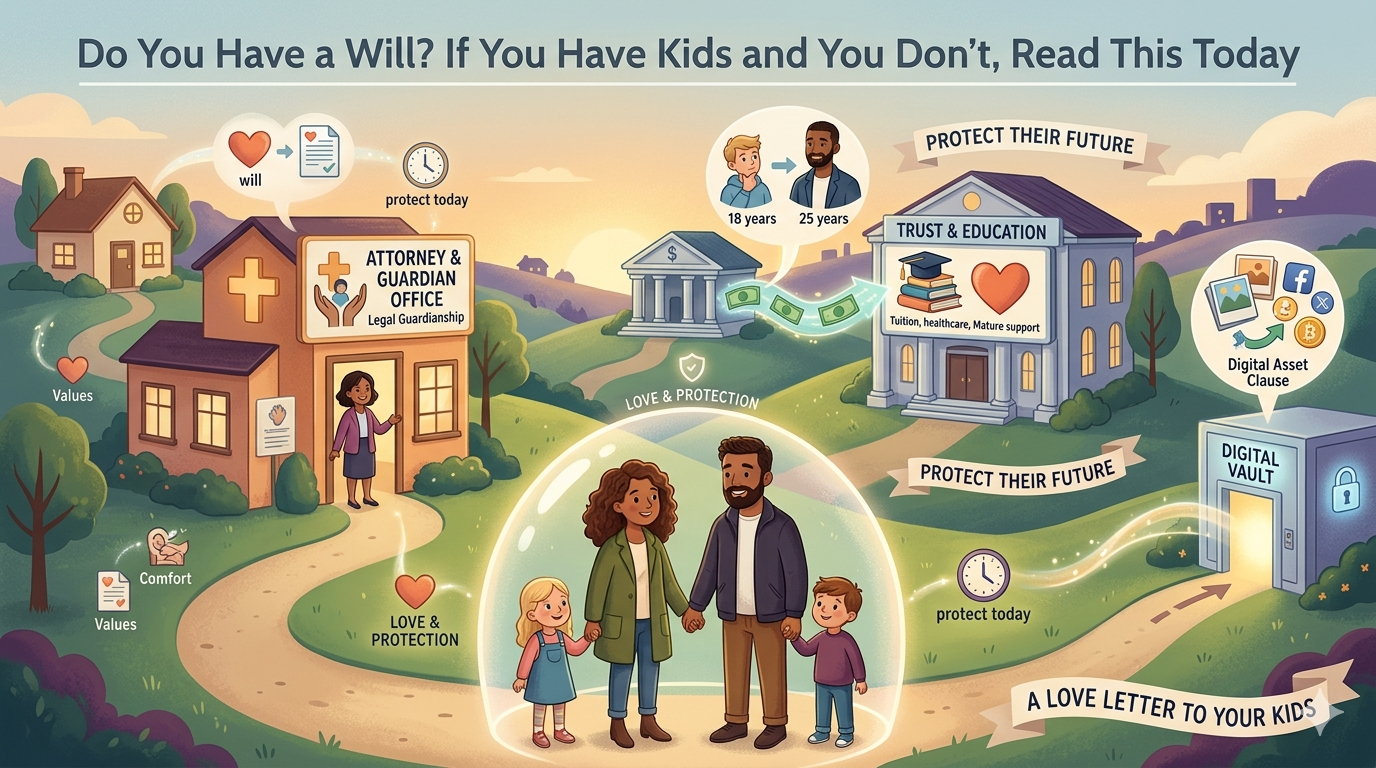
For many parents, writing a will feels like a task for “later”—something to tackle once the mortgage is paid off, the kids are in college, or retirement is on the horizon. But if you have children, a will isn’t about your assets; it’s about their protection.
In 2026, the process of estate planning has become simpler and more accessible, yet a staggering number of parents still haven’t checked this box. If you are one of them, here is why a will is the most important document you will ever sign for your children.
1. The Power of Guardianship
The most critical reason for a parent to have a will has nothing to do with money. It is the Legal Guardianship clause.
If both parents pass away without a will (dying “intestate”), the state—not your family—decides who raises your children. While judges try to act in the “best interest of the child,” they are outsiders. They don’t know that your sister shares your parenting values, or that your best friend is the only person who can truly comfort your son. Without a will, your children could potentially be placed in foster care while the court system spends months or even years vetting relatives.
2. Preventing “Inheritance Chaos”
Without a will, state laws dictate how your assets are distributed. This often leads to “The Age 18 Problem.”
In many jurisdictions, if a parent dies without a will, the child’s inheritance is held in a state-monitored account until they turn 18. On their 18th birthday, they receive the entire sum in one lump payment. Most parents agree that an 18-year-old—no matter how responsible—is rarely prepared to manage a significant inheritance, life insurance payout, or the equity from a family home.
A will allows you to establish a Testamentary Trust. This ensures the money is managed by a trustee of your choosing and can be used for specific needs (like tuition or healthcare) until the child reaches a more mature age, such as 25 or 30.
3. Protecting Your Partner
Many parents assume that if they die, everything automatically goes to their spouse. This is a common and dangerous misconception.
In many states, if you die without a will, your assets are split between your surviving spouse and your children. This can create a financial nightmare. If your spouse needs to sell the family home to downsize or move closer to family, they may need court permission because the children technically “own” a portion of that house. A will ensures your spouse has the immediate financial flexibility to provide for the kids without red tape.
4. Digital Assets and 2026 Reality
In 2026, our lives are digital. From family photo archives on the cloud to cryptocurrency and social media accounts, your “estate” isn’t just physical.
A modern will includes a Digital Asset Clause. This gives your chosen executor the legal right to access your accounts so that precious family memories aren’t locked away forever behind a password you took to the grave.
How to Get Started Today
You don’t need a massive estate or a complex portfolio to justify a will. You simply need to care about what happens to your kids.
-
Choose your guardian: Talk to them first to ensure they are willing and able to take on the role.
-
Pick an executor: This is the person who will handle the paperwork and distribute assets.
-
Use a professional or a verified platform: In 2026, many online legal platforms offer state-specific, attorney-vetted templates that are affordable and legally binding.
-
Update it regularly: Major life events—like the birth of a second child or a divorce—require an update to your documents.
The Bottom Line: A will is a love letter to your children. It provides them with a roadmap through the most difficult time of their lives, ensuring they are cared for by people you trust and supported by the resources you worked hard to provide. Don’t wait for “later.” Protect them today.