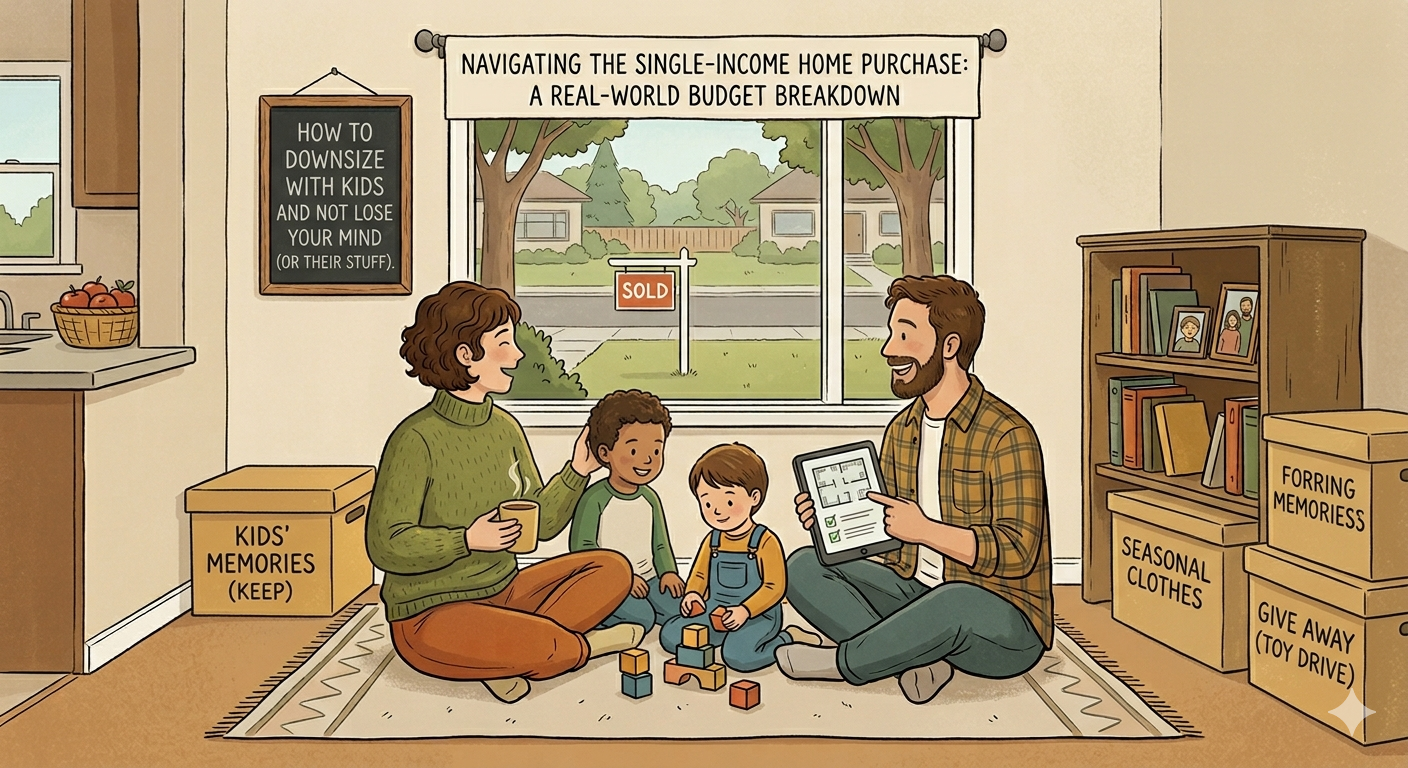
Moving into a smaller home with children feels, at first, like a logistical nightmare wrapped in an emotional one. There are the toys that haven’t been touched in eight months but are apparently non-negotiable. The craft supplies reproducing quietly in a closet. The sports equipment for a sport your child quit in February. And underneath all of it, a very real fear that saying goodbye to space means saying goodbye to something bigger — comfort, freedom, the version of family life you’d built.
It doesn’t have to go that way. Here’s how families actually make it work.
Reframe the Story You’re Telling
Children pick up on parental anxiety like radar. If the adults in the house treat downsizing as a loss — something that’s happening to the family — kids will mirror that energy and dig in. The families that navigate this transition smoothly tend to share one thing: they tell a different story.
Moving into a smaller home isn’t shrinking. It’s streamlining. It’s a deliberate choice to live with less clutter, less maintenance, and often more financial breathing room. When parents genuinely believe that narrative — and communicate it with consistency — children adapt faster than most parents expect. The tone you set in the first conversations about the move will echo through every sorting session and packing day that follows.
Declutter in Rounds, Not One Brutal Session
The single biggest mistake families make is scheduling one massive weekend to “go through everything.” It’s exhausting, it generates conflict, and it leads to desperate bargaining and tearful standoffs over things nobody even remembered owning last week.
A better approach is decluttering in waves. Start three to four months before your move and work through one category or one room every week or two. Give things time to settle. Often, an item a child insisted on keeping in round one gets released without drama two weeks later because they’ve mentally processed the decision.
This slower rhythm also prevents the guilt spiral that hits when you’ve donated something and your child immediately asks for it. Staged decluttering gives everyone breathing room.
Teach the Difference Between Memories and Objects
Children often conflate the two, which is why letting go of a faded drawing or a broken toy can feel catastrophic. One of the most useful things a parent can do during a downsize is gently teach that memories live inside us — not inside things.
A practical tool: photograph items before releasing them. Let your child take the picture themselves. A photo album of “things we loved” preserves the memory without requiring the physical space. Many parents report their children almost never look at these photos afterward — but the act of taking them was enough to make letting go feel safe.
Protect a Small, Sacred Space for Each Child
In the new home, however compact it may be, every child needs a corner of the world that is entirely theirs. It doesn’t need to be large. It needs to feel intentional — a reading nook, a desk with their things arranged exactly how they want them, a shelf that holds only what they chose.
When children have ownership over a defined space, they stop mourning the loss of square footage and start investing in what they have. Personalization is more powerful than size.
Let Go of the Guilt
Here is the part nobody says plainly enough: you are allowed to make this decision for your family without your children’s full buy-in. Parental guilt drives a lot of unnecessary keeping — boxes of things nobody uses preserved because getting rid of them feels like a statement about what the family deserved.
Smaller doesn’t mean lesser. Some of the most connected, creative, and genuinely happy childhoods on record happened in tight quarters. What children remember is rarely the square footage. It’s whether the people in that space were present, warm, and at ease.
Downsize without apology. The sanity you protect in the process is good for everyone.