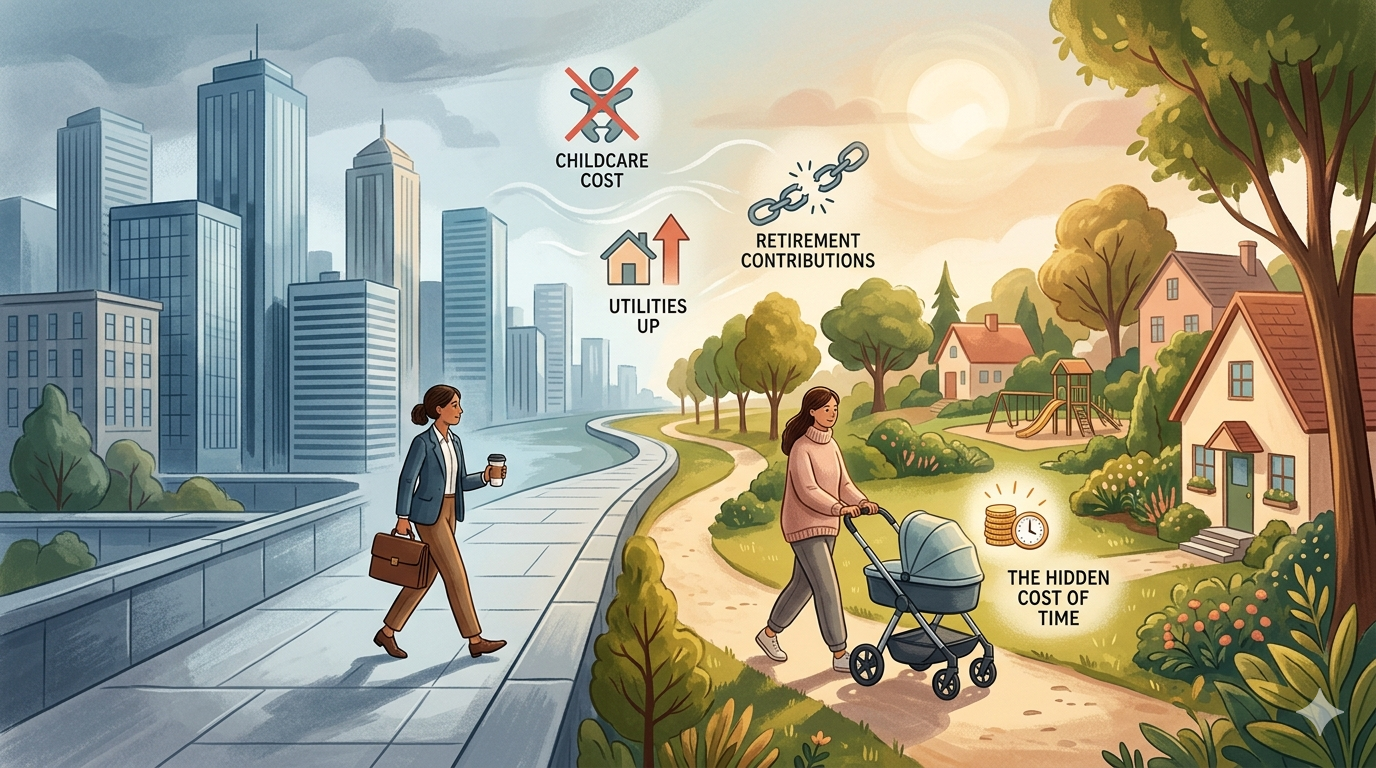
The alarm didn’t go off at 6:00 AM. For the first time in eight years, there was no frantic commute, no lukewarm office coffee, and no back-to-back Zoom calls. I was officially a stay-at-home parent.
On paper, the math seemed simple. We’d save on the staggering costs of childcare, I’d handle the meal prep to cut down on takeout, and the “quality of life” dividend would surely outweigh my lost salary. But as the weeks turned into months, a different financial reality emerged—one that the glossy lifestyle blogs rarely mention.
If you are considering trading your briefcase for a diaper bag, here is the unvarnished financial truth about the transition.
The “Phantom” Expenses of Being Home
Most people calculate the big wins: childcare savings and gas money. What they miss are the incremental costs of living in your home 24/7. When you are at an office, the company pays for the heating, the high-speed internet, the electricity, and the endless stream of coffee.
When you’re home, your utility bills reflect that. The dishwasher runs twice as often. The AC works overtime during the midday heat. Suddenly, those “minor” household expenses begin to nibble away at the savings you thought you’d secured.
The Loss of “Financial Autonomy”
This is the psychological hurdle no one warns you about. Even in a healthy, shared-income marriage, there is a profound shift when you go from “my money” to “our money” generated solely by someone else.
Every personal purchase—a new book, a haircut, a solo coffee—suddenly feels like it requires an internal audit. You might find yourself justifying expenses that you never gave a second thought to when you were pulling a paycheck. It’s not that your partner is gatekeeping; it’s the internal loss of agency that changes how you spend.
The “Motherhood Penalty” and the Invisible Gap
The financial reality isn’t just about today’s bank balance; it’s about tomorrow’s wealth. When you exit the workforce, you aren’t just losing your salary. You are pausing:
-
401(k) contributions and employer matches.
-
Social Security credits.
-
Professional upward mobility.
A three-year gap isn’t just three years of missed pay; it can be a decade of “catch-up” in terms of raises and compound interest. In the storytelling of modern parenting, we focus on the “now,” but the long-term wealth gap is the true silent cost.
Reclaiming the Narrative: Strategic Budgeting
To survive this shift, we had to move beyond a simple spreadsheet. We implemented three “survival” tactics:
-
The “Fun Money” Allowance: We both get a set amount of “no-questions-asked” cash each month. This preserved my sense of autonomy.
-
The Spousal IRA: Just because I wasn’t earning a traditional salary didn’t mean my retirement should stall. We prioritized contributions to a Spousal IRA to keep my future nest egg growing.
-
The Lifestyle Audit: We stopped looking at “what we saved on daycare” and started looking at “what we actually spent on groceries.” Bulk buying and meal planning became a necessity, not a hobby.
The Verdict
Is it worth it? For our family, yes. The richness of being present for the “firsts” is a currency of its own. However, entering this phase with rose-colored glasses is a financial risk.
The financial reality of being a stay-at-home parent isn’t just about spending less—it’s about managing differently. It requires a radical transparency with your partner and a disciplined eye on the long-term horizon. If you’re making the leap, do it for the love—but keep your eyes on the ledger.