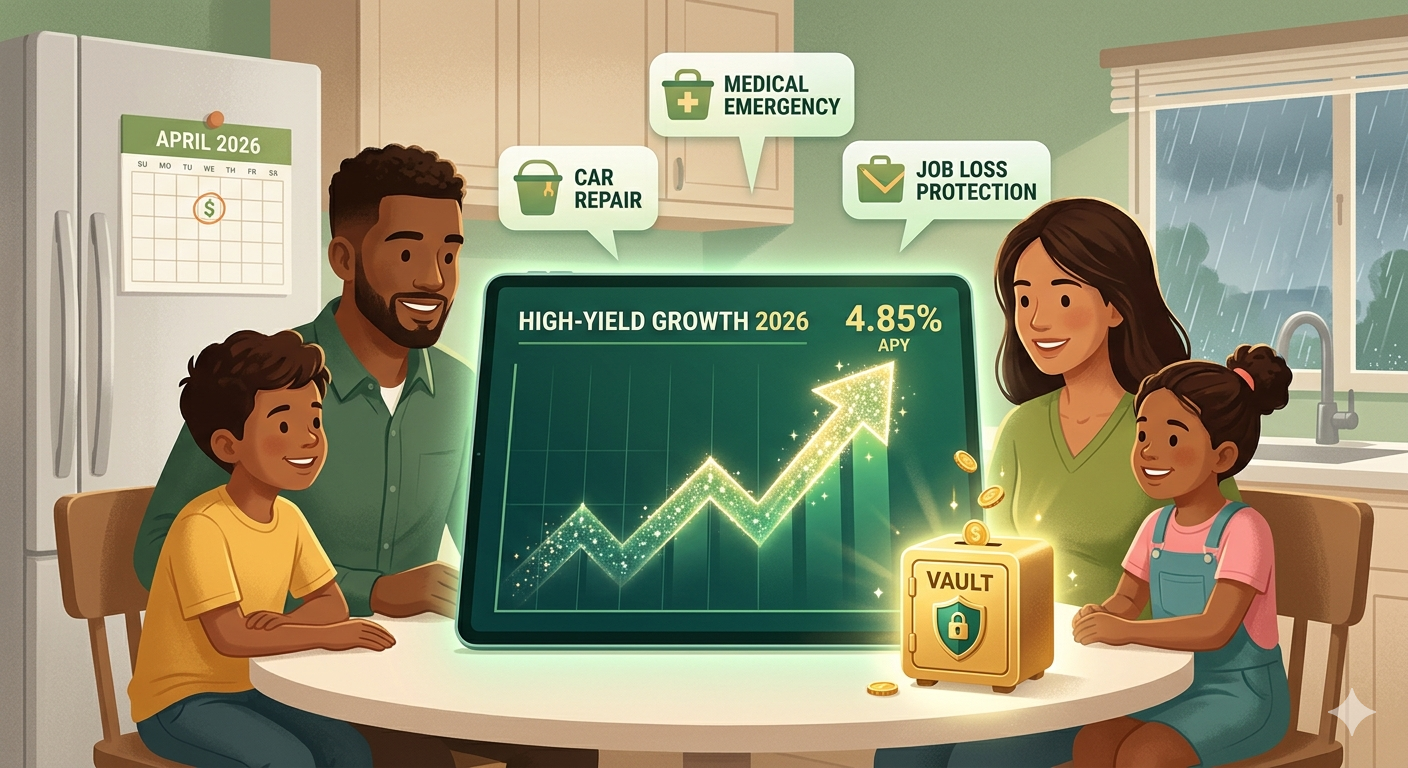
In the fast-evolving financial landscape of 2026, the traditional “piggy bank” has gone digital. For families, the necessity of an emergency fund hasn’t changed, but the strategy for where to keep it has. With inflation and market volatility remaining key concerns, leaving your safety net in a standard savings account—earning a measly 0.01%—is essentially losing money.
To protect your family’s future, you need to leverage High-Yield Savings Accounts (HYSAs). Here is your guide to maximizing your liquidity and interest in 2026.
Why a High-Yield Savings Account (HYSA)?
A HYSA is a type of savings account that typically pays 10 to 20 times the national average interest rate. In 2026, many online-only banks are offering rates between 4.50% and 5.25% APY. For a family with a $20,000 emergency fund, that’s an extra $1,000 a year just for letting your money sit in a safe, insured spot.
The Benefits for Families:
-
Safety First: Most top-tier HYSAs are FDIC-insured up to $250,000, ensuring your family’s hard-earned cash is protected.
-
Liquidity: Unlike a Certificate of Deposit (CD), a HYSA allows you to withdraw your money at any time without heavy penalties—critical for when the HVAC breaks or a medical emergency arises.
-
Psychological Peace of Mind: Knowing you have 3–6 months of expenses in a dedicated, growing account reduces financial stress at home.
What to Look for in 2026
Not all savings accounts are created equal. When choosing a home for your emergency fund this year, prioritize these features:
-
No Monthly Maintenance Fees: In the digital banking era, you should never pay a fee to save money.
-
User-Friendly Mobile Apps: As a busy parent, you need to move money with two taps. Look for apps with high ratings and robust security like biometric login.
-
Savings “Buckets” or “Vaults”: Some modern banks allow you to sub-divide your main account. You can have one “bucket” for “Emergency Medical,” one for “Car Repairs,” and another for “Job Loss Protection.”
-
Competitive APY: Don’t settle. If your bank hasn’t raised your rate in six months despite market trends, it might be time to switch.
The Strategy: Automate Your Safety Net
The most successful families in 2026 don’t save “whatever is left at the end of the month.” They treat their emergency fund like a mandatory bill.
Pro Tip: Set up a direct deposit from your employer so that $100 or $200 goes straight into your HYSA before it even hits your checking account. This “out of sight, out of mind” approach builds wealth silently.
Top Recommendations for 2026
While specific rates change weekly, the industry leaders in 2026 continue to be digital-first institutions like Ally Bank, SoFi, Marcus by Goldman Sachs, and American Express. These banks consistently offer high rates and lack the overhead costs of physical branches, passing those savings on to you.
Conclusion
In 2026, an emergency fund is more than just a backup plan; it’s an active asset. By moving your family’s safety net into a High-Yield Savings Account, you aren’t just preparing for a rainy day—you’re making sure your money grows even when the clouds are away.
Take 15 minutes this weekend to compare your current savings rate. Your future self will thank you.