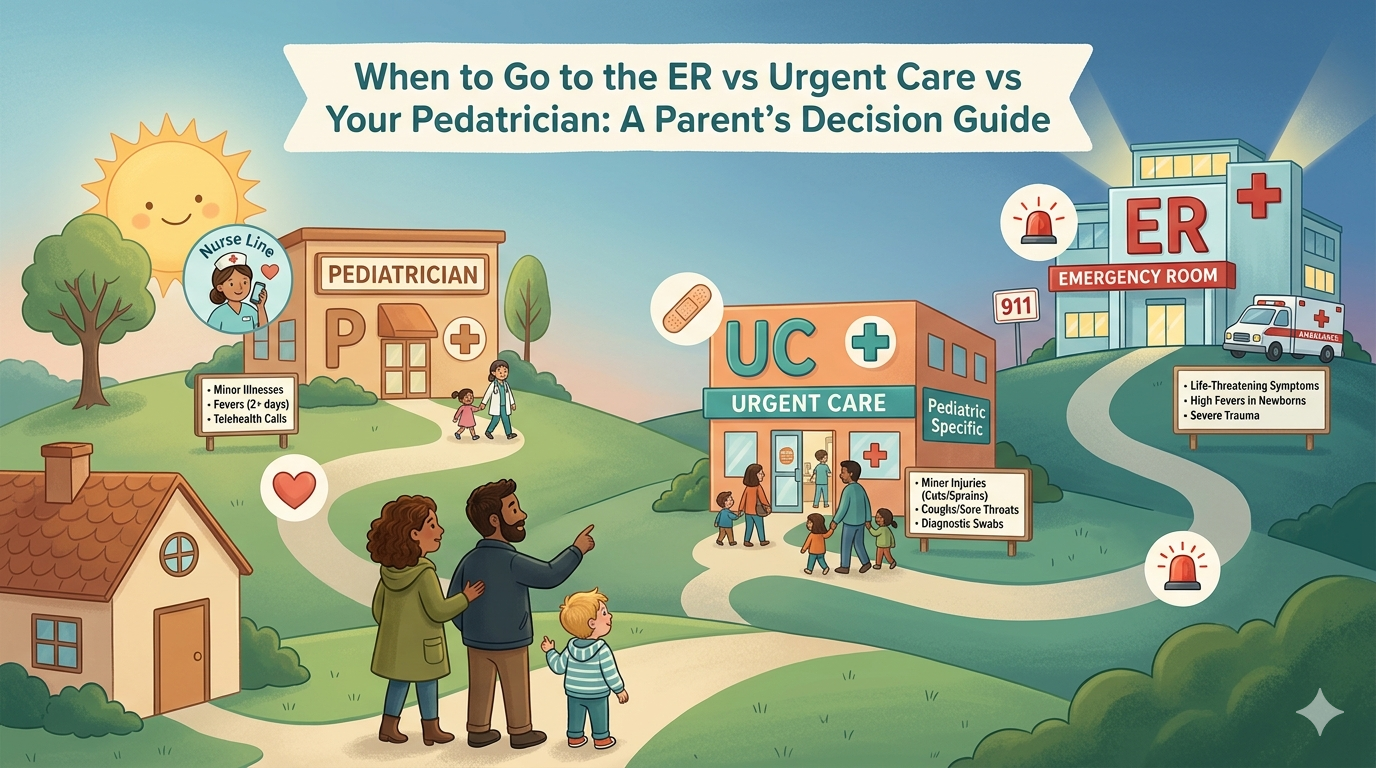
It is 2:00 AM, your child has a fever, and you are staring at your car keys. We have all been there. The panic of a sick or injured child often clouds our judgment, leading to expensive ER visits for minor issues or, conversely, waiting too long for a specialist when time is of the essence. In 2026, healthcare navigation has become more streamlined, but the core question remains: Where do we go? This guide will help you triage your child’s health needs with confidence.
The Pediatrician: Your First Line of Defense
Whenever possible, your primary pediatrician should be your first call. They know your child’s medical history, vaccination records, and baseline “normal.” You should reach out to them for fevers in children over three months old that last more than two days but are responsive to medicine. They are also the best resource for minor illnesses like earaches, sore throats, persistent coughs, or unexplained rashes.
Furthermore, your pediatrician is the right place for behavioral health concerns such as anxiety or ADHD, and for ongoing issues like chronic stomach pain or mild asthma management. Most clinics in 2026 now offer telehealth visits, so a ten-minute video call can often save you a trip if you are unsure about the severity of a symptom.
Urgent Care: The “In-Between” Solution
Urgent Care is designed for issues that cannot wait for an appointment tomorrow but are not life-threatening. Think of it as a bridge for when your pediatrician’s office is closed or fully booked. This is the place for minor injuries like sprains, strains, or minor cuts that might need a few stitches.
It is also the right choice for quick diagnostic needs, such as testing for a UTI or Strep throat. If your child has mild dehydration from vomiting or diarrhea but can still keep small sips of fluid down, Urgent Care can help. They are also experts at “object removal”—for those times a bead or a toy finds its way into a nostril or ear. When possible, look for a dedicated Pediatric Urgent Care, as they are staffed by providers trained specifically in child-sized equipment and dosages.
The Emergency Room: For True Emergencies
The ER is for “Life or Limb.” It is equipped with advanced imaging and specialists that other facilities lack. However, it is also the most expensive and time-consuming option for non-emergencies. You should head to the ER or call emergency services immediately if your child shows signs of respiratory distress, such as “sucking in” at the ribs or lips turning blue or gray.
A high fever in a newborn is also an automatic emergency; any temperature over 100.4°F in a baby under two months old requires immediate ER attention. Other reasons for the ER include severe trauma like obvious bone deformities, deep wounds that won’t stop bleeding, or head injuries followed by confusion. Severe allergic reactions involving swelling of the face or tongue, or an altered mental state where the child is hard to wake, also require the highest level of care.
Final Thoughts for 2026
Before an emergency happens, save three numbers in your phone: your pediatrician’s after-hours line, the nearest Pediatric Urgent Care, and the closest Children’s Hospital ER. Trust your parental intuition. If your gut tells you something is deeply wrong, do not hesitate to seek emergency care. Otherwise, a quick call to your pediatrician’s nurse line is often the smartest and calmest first step you can take.