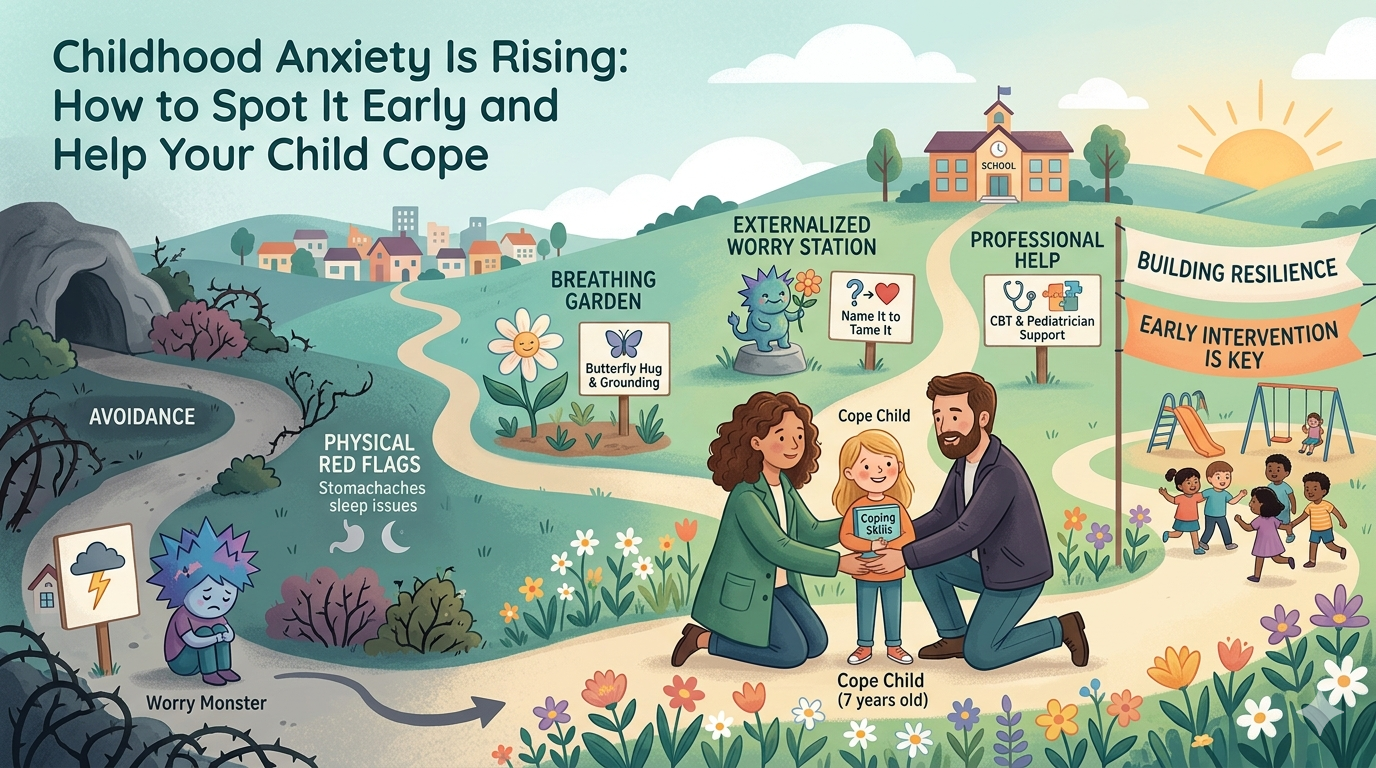
In 2026, the landscape of childhood has changed. Between digital saturation and a fast-paced world, nearly 1 in 5 children now meets the clinical criteria for an anxiety disorder. While some worry is a natural part of growing up, modern stressors are pushing more children into a state of chronic “fight or flight.”
Understanding the difference between typical nerves and an anxiety disorder is the first step toward helping your child regain their confidence. Here is how to spot the signs early and the evidence-based strategies pediatricians recommend right now.
Beyond “Shyness”: Spotting the Early Signs
Anxiety in children rarely looks like the “worrying” we see in adults. Children often lack the emotional vocabulary to say, “I feel overwhelmed by the social expectations of school.” Instead, anxiety speaks through their bodies and behaviors.
1. Physical Red Flags
If your child frequently complains of the following—especially on school mornings or before social events—it may be anxiety in disguise:
-
Frequent stomachaches or headaches.
-
Sudden changes in appetite (eating significantly more or less).
-
Sleep disturbances, such as trouble falling asleep or frequent nightmares.
-
Muscle tension or a “fidgety” restlessness that looks like ADHD.
2. Behavioral Shifts
Look for patterns of avoidance. While it’s tempting to think a child is just being “difficult,” refusal to attend birthday parties, clinginess in new environments, or extreme meltdowns over small routine changes are often protective mechanisms against fear.
The “Anxiety Cycle”: Why Avoidance Doesn’t Work
When a child is scared of a dog, a parent’s instinct is to move the child away. This provides immediate relief, but it accidentally teaches the child’s brain that the dog was indeed a life-threatening danger.
In 2026, psychologists emphasize exposure over avoidance. The goal isn’t to eliminate the feeling of anxiety, but to increase the child’s distress tolerance. By gently facing fears in small, manageable steps, children learn that they are capable of handling uncomfortable emotions.
How to Help Your Child Cope: 3 Proven Strategies
1. The “Butterfly Hug” and Grounding
For immediate “moments of crisis,” sensory grounding is vital. The Butterfly Hug—where a child crosses their arms and taps their shoulders in an alternating rhythm—helps regulate the nervous system through bilateral stimulation.
2. Name It to Tame It
Encourage your child to view their anxiety as a separate entity. Give it a name, like “The Worry Monster” or “The What-If Voice.” When the child says, “The Worry Monster is telling me I’ll fail my test,” it externalizes the problem. This allows the child to talk back to the fear rather than being consumed by it.
3. Model “Healthy Struggling”
Children are emotional sponges. If they see you managing your own stress with deep breaths or a calm “This is hard, but I can handle it” attitude, they will mimic that resilience. Avoid “leading questions” like, “Are you nervous about the party?” Instead, ask open-ended questions: “How are you feeling about the party today?”
When to See a Professional
If anxiety is preventing your child from sleeping, eating, attending school, or making friends, it is time to consult a pediatrician. In 2026, the gold standard for treatment remains Cognitive Behavioral Therapy (CBT), often combined with “Parent-Child Interaction Therapy” to give you the tools to support them at home.
The Bottom Line: You aren’t just managing symptoms; you are building a resilient human. Early intervention is the greatest gift you can give an anxious child, turning a world that feels “too big” back into a place of adventure and growth.