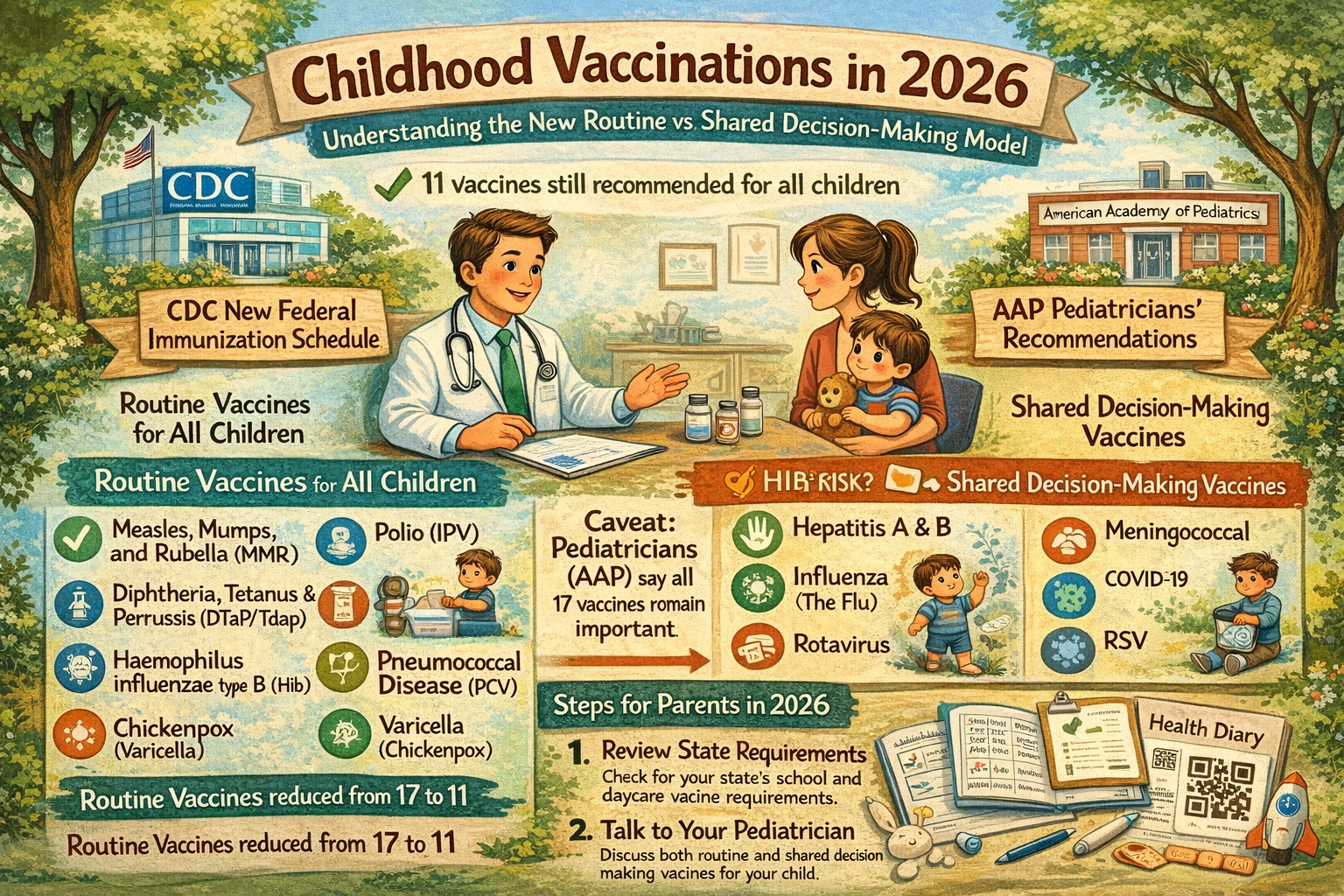
The 2026 childhood vaccination landscape has undergone its most significant transformation in decades. For parents, staying informed is no longer just about checking a box at the pediatrician’s office; it is about navigating a new system of “routine” vs. “shared decision-making” recommendations.
As of January 2026, the Centers for Disease Control and Prevention (CDC) and the Department of Health and Human Services (HHS) have overhauled the federal immunization schedule. Here is what you need to know about these changes and how to protect your child’s health.
The New “Routine” vs. “Shared Decision-Making” Model
The biggest change in 2026 is the reorganization of how vaccines are categorized. Previously, most vaccines were “routinely recommended” for all children. Now, the CDC has reduced the number of routine-use diseases from 17 down to 11.
Vaccines Still Routinely Recommended for All Children:
The CDC continues to recommend that every child receive protection against these 11 diseases:
-
Measles, Mumps, and Rubella (MMR)
-
Polio (IPV)
-
Diphtheria, Tetanus, and Pertussis (DTaP/Tdap)
-
Haemophilus influenzae type B (Hib)
-
Pneumococcal disease (PCV)
-
Varicella (Chickenpox)
-
Human Papillomavirus (HPV) — Note: The recommendation for HPV has been reduced from two doses to a single dose.
Vaccines Moved to “Shared Clinical Decision-Making”:
Six vaccines that were once routine are now designated as “risk-based” or requiring “shared clinical decision-making” (SCDM). This means they are primarily recommended for high-risk groups, and other parents must discuss them individually with their doctor:
-
Hepatitis A and Hepatitis B
-
Influenza (The Flu shot)
-
Rotavirus
-
Meningococcal disease
-
COVID-19
-
RSV (Respiratory Syncytial Virus)
The Stance of Pediatricians: AAP vs. CDC
It is vital for parents to know that the medical community is currently divided. The American Academy of Pediatrics (AAP) has broken with the CDC, releasing its own 2026 schedule that continues to recommend all 18 vaccines (including those the CDC moved to SCDM) for all healthy children.
Pediatricians argue that these vaccines remain the optimal way to prevent severe illness, hospitalizations, and long-term complications. For example, while the CDC now views the Hepatitis B and Flu shots as a choice for healthy infants, the AAP maintains they are essential for community health and individual safety.
What This Means for Insurance and Costs
One major concern for parents is whether insurance will still pay for vaccines that are no longer “routinely recommended” by the CDC.
Fortunately, under current federal guidelines, all vaccines that were recommended as of December 31, 2025, must still be covered without out-of-pocket costs by private insurance, Medicaid, and the Vaccines for Children (VFC) program. You still have the right to request these vaccines for your child even if they are now in the “shared decision-making” category.
3 Steps for Parents in 2026
-
Review Your State’s Requirements: While the CDC sets national guidelines, individual states determine which vaccines are required for school and daycare entry. Many states may choose to stick with the older, more comprehensive schedule.
-
Talk to Your Pediatrician: Because many vaccines are now “SCDM,” your doctor will not automatically administer them unless you have a conversation. Ask your doctor why they do or do not recommend certain shots based on your child’s specific health profile.
-
Keep Accurate Records: With the federal government scaling back its “default” recommendations, the responsibility for tracking which vaccines your child has received falls more heavily on parents. Use a digital portal or a physical health diary to stay organized.
Conclusion
The 2026 vaccination schedule offers more “flexibility,” but it also requires parents to be more proactive. By understanding the difference between federal routine guidelines and the evidence-based recommendations of the American Academy of Pediatrics, you can make the most informed choice for your child’s long-term immunity.