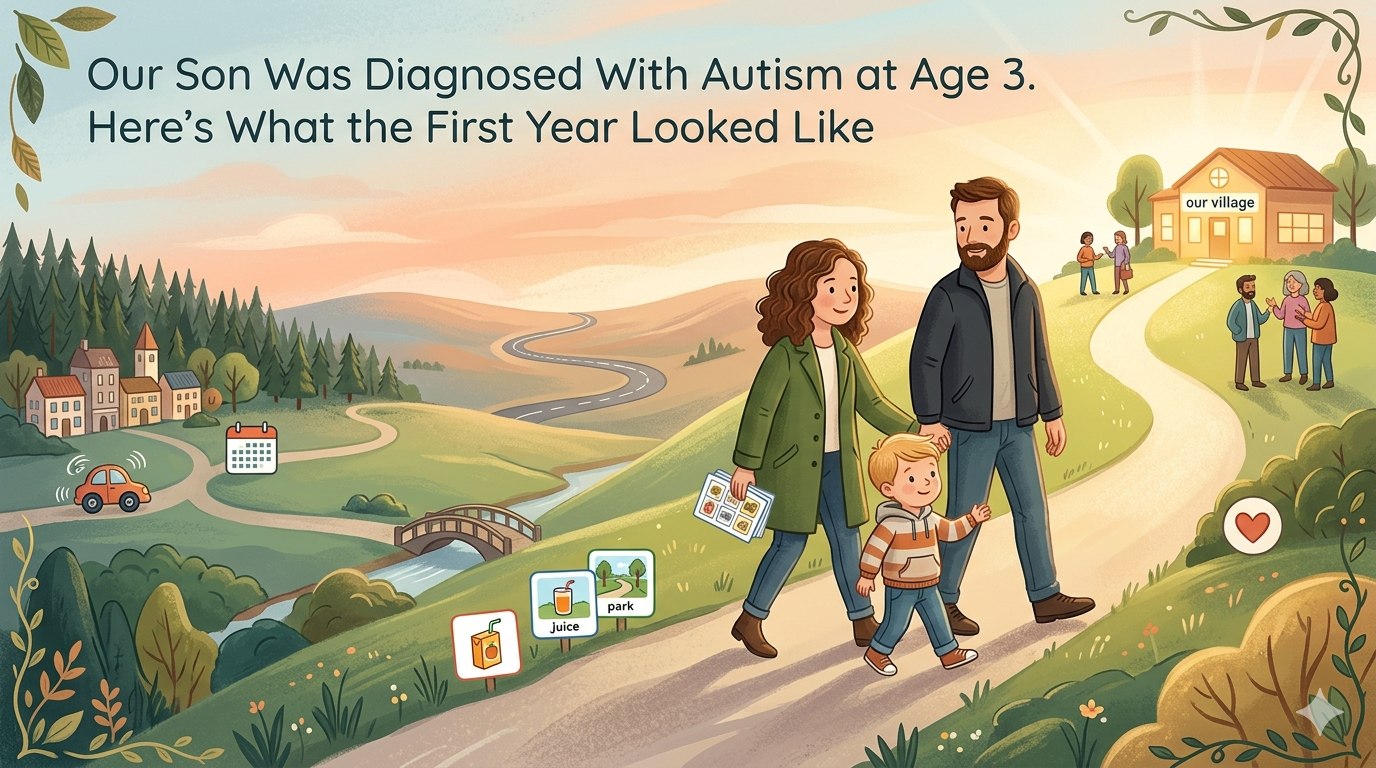
The moment the doctor uttered the word “Autism,” the air in the small examination room seemed to vanish. Our son, Leo, was three years old, sitting on the floor obsessed with the spinning wheels of a toy car, oblivious to the fact that his world—and ours—had just shifted on its axis.
If you are a parent standing at the precipice of a new diagnosis, know this: the first year is not a straight line. It is a season of shedding old expectations and discovering a different, deeper kind of joy. Here is what that first year truly looked like for our family.
The Season of Grief and Observation
The first three months were a blur of “what ifs.” We spent hours scrolling through late-night forums, searching for early signs of autism we might have missed. We mourned the future we had imagined—the one filled with team sports and easy birthday parties.
But then, the observation began. Without the pressure of “hitting milestones” on a standard chart, we started seeing Leo for who he actually was. We noticed his incredible eye for detail and the way he found music in the hum of the refrigerator. The diagnosis didn’t change our son; it simply gave us the manual we had been missing.
Navigating the “Therapy Marathon”
By month six, our calendar looked like a military operation. Between Speech Therapy, Occupational Therapy (OT), and developmental evaluations, our car became a second home.
We learned that progress in the first year isn’t measured in leaps, but in “microliths”:
-
The First Point: The day Leo finally pointed to a juice box instead of screaming was worth a thousand trophies.
-
Sensory Success: We discovered that the world was too loud for him. Replacing crowded malls with quiet park walks transformed his meltdowns into moments of calm.
-
Visual Schedules: Our fridge became a collage of “First/Then” boards. Structure wasn’t a cage; it was the safety net that allowed him to thrive.
Redefining Communication
One of the hardest realizations of the first year was that communication doesn’t always require words. Leo was non-verbal when he was diagnosed at age three. We spent months feeling like we were shouting across a canyon.
Then came the “Visual Language” phase. Through PECS (Picture Exchange Communication System) and basic signs, the canyon narrowed. We realized that when he led us by the hand to the bookshelf, he wasn’t just being bossy—he was sharing his heart. By the end of the year, the “silence” in our house felt less like a void and more like a different frequency we were finally learning to tune into.
Finding Your Village
The isolation of a new autism diagnosis can be overwhelming. Friends often don’t know what to say, and family members might suggest he’ll “grow out of it.”
The turning point in our first year was finding “our people.” Whether it was a local support group or an online community of special needs parents, having a space to say, “Today was hard,” without judgment was our lifeline. We stopped comparing Leo to the neighbor’s three-year-old and started celebrating him alongside kids who shared his unique rhythm.
Reflection: One Year Later
As we hit the one-year anniversary of that diagnosis, the “tragedy” we feared has been replaced by a new normal. Our living room is messier, our schedule is tighter, and our perspective is infinitely wider.
Autism isn’t a wall; it’s a door. It leads to a world where progress is precious, neurodiversity is a strength, and love doesn’t need a single spoken word to be felt. If you are just starting your first year, breathe. You aren’t losing your child; you are finally getting to know them.