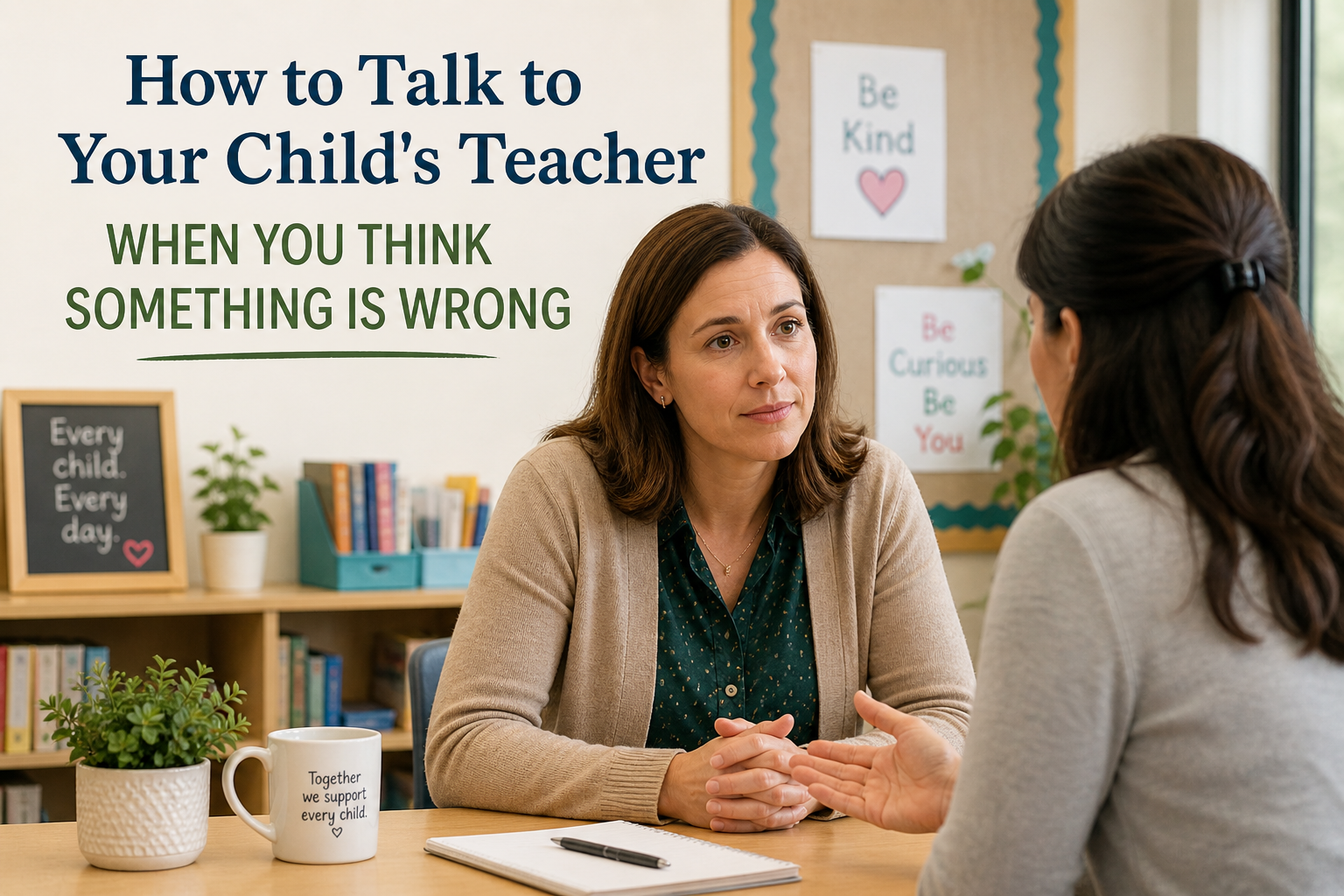
When something doesn’t feel right about your child’s experience at school, it can be difficult to know how to approach their teacher. You may feel protective, anxious, or even frustrated—but how you start that conversation can make a big difference in finding a solution. The goal isn’t to accuse or confront, but to understand, collaborate, and support your child effectively.
Start by getting clear on your concerns. Before reaching out, take some time to gather specific observations.
Is your child suddenly reluctant to go to school? Have their grades dropped? Are they mentioning problems with classmates or expressing discomfort about the classroom environment?
Writing down examples can help you communicate clearly and avoid sounding vague or overly emotional during the conversation.
Next, choose the right time and method to connect. Instead of bringing up concerns during busy drop-off or pick-up times, request a dedicated meeting. A short, polite email asking for a convenient time to talk shows respect for the teacher’s schedule and sets a constructive tone. If possible, opt for a face-to-face meeting or a video call, as it allows for better communication than a quick message exchange.
When the conversation begins, lead with curiosity rather than assumptions. Instead of saying, “Something is wrong in your class,” try framing it as, “I’ve noticed some changes in my child, and I wanted to get your perspective.” This approach opens the door for dialogue instead of defensiveness. Remember, teachers often have insights into your child’s behavior in a group setting that you might not see at home.
It’s also important to listen—really listen. Give the teacher space to explain what they’ve observed. Sometimes, what feels like a serious issue may have a different explanation, or it could be something the teacher is already aware of and addressing. Active listening shows that you’re interested in working together rather than placing blame.
Be honest but respectful when sharing your concerns. Use “I” statements to express what you’ve noticed: “I’ve seen that my child seems anxious about math lately,” or “I’m concerned because they’ve mentioned feeling left out.” This keeps the focus on your child’s experience rather than criticizing the teacher’s actions. Tone matters just as much as words—calm, respectful communication encourages cooperation.
If there is a problem, shift the focus toward solutions. Ask questions like, “What can we do together to support my child?” or “Are there strategies we can try at home and in class?” This reinforces that you see the teacher as a partner. Collaboration often leads to more effective and lasting solutions than confrontation.
It’s also helpful to follow up. After the meeting, send a brief message thanking the teacher for their time and summarizing any agreed steps. This ensures you’re both on the same page and shows your commitment to improving the situation. If needed, check in again after a few weeks to see how things are progressing.
Finally, trust your instincts—but stay open-minded. As a parent, you know your child best, and your concerns are valid. At the same time, approaching the situation with flexibility allows you to see the full picture and respond more effectively.
Talking to your child’s teacher about a concern can feel uncomfortable, but it’s an important step in advocating for your child. With preparation, respect, and a collaborative mindset, you can turn a worrying situation into an opportunity for support and growth.