For many parents, the thought of estate planning feels morbid or like a chore reserved for the ultra-wealthy. You might assume that if the worst happens, your family will simply “figure it out” or that your children will automatically be cared for by the person you’ve always imagined.
In 2026, the legal reality is much more rigid. Dying without a will—known legally as dying “intestate”—means you have effectively handed a blank check and a blindfold to the government. If you have children and no legal plan, here is the reality of what happens next.
1. The State Becomes the Decision-Maker
The most terrifying consequence of dying without a will is the loss of control over legal guardianship.
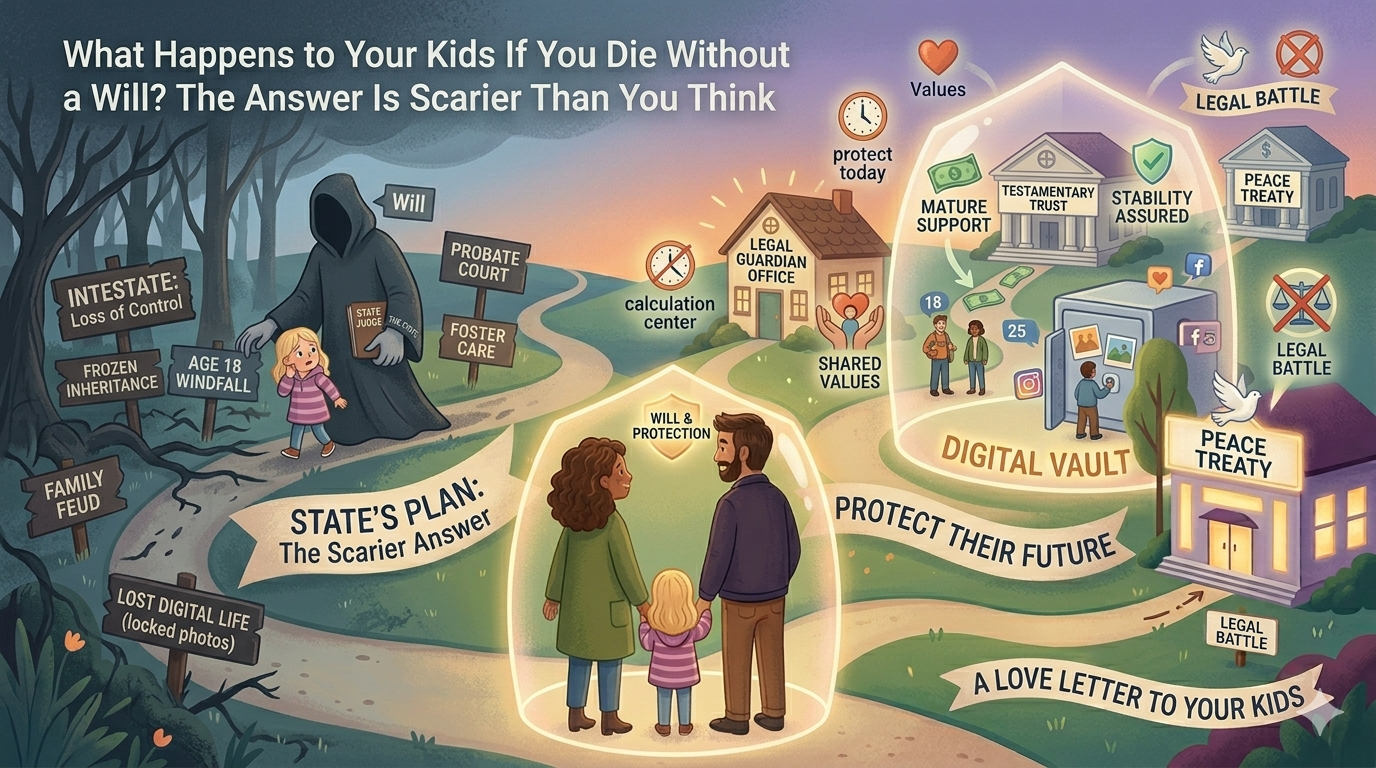
If both parents pass away, a judge who has never met your family will decide who raises your children. While the court aims for the “best interest of the child,” they are bound by strict legal protocols. They may choose a blood relative who is financially stable but emotionally distant, over a close family friend who shares your values and parenting style.
Without your written directive, your children could even be placed in temporary foster care while the court system spends months vetting potential guardians. A will is the only way to ensure your children stay with the people you trust.
2. The “Frozen” Inheritance
Many parents assume their assets will seamlessly transition to their spouse or children. This is a dangerous misconception.
When you die intestate, your estate enters a lengthy and expensive process called Probate. The court freezes your bank accounts, property, and investments. Before your children can see a dime, the court must appoint an administrator, pay off all creditors, and settle legal fees—all of which are deducted from your children’s future.
In 2026, the average probate process can take anywhere from nine months to two years. During this time, your family may struggle to pay for the children’s basic needs, like mortgage payments or school tuition, because the funds are locked in legal limbo.
3. The “Age 18” Windfall
If you don’t have a will to establish a Testamentary Trust, your children will likely receive their entire inheritance the moment they reach the legal age of majority (usually 18).
Imagine an 18-year-old suddenly receiving a $250,000 life insurance payout or the equity from a family home. Most teenagers lack the financial literacy to manage such a sum. Without a will, you cannot stagger the distribution or ensure the money is used specifically for education or housing. You are essentially handing a Ferrari to someone who hasn’t learned to drive.
4. Family Feuds and Legal Battles
Nothing tears a grieving family apart quite like a lack of clarity. If you haven’t named a guardian or an executor, well-meaning relatives may fight for control. These “custody wars” are not only emotionally scarring for children who have just lost their parents, but they also drain the estate’s resources through mounting legal fees.
A will acts as a “peace treaty.” It provides a clear roadmap that silences disputes before they begin, allowing your family to focus on healing rather than litigation.
5. Protecting Your “Digital Life”
In our modern world, much of our legacy is digital. From family photo archives to cryptocurrency wallets, these assets are often protected by two-factor authentication and strict privacy laws.
Without a Digital Asset Clause in a formal will, your children may be permanently locked out of your digital history. In 2026, those photos and videos are often the most precious “assets” a child has left of their parents. A will ensures your executor has the legal authority to recover these memories.
Take Action Today
Writing a will isn’t about death; it’s about the life your children will lead after you are gone.
-
Identify your guardians: Choose primary and back-up options.
-
Consult a professional: Whether using an online platform or a local attorney, ensure your document is state-specific.
-
Store it safely: Ensure your loved ones know where the physical copy or digital access key is located.
The Bottom Line: The state has a plan for your children, but you probably won’t like it. By taking one hour to create a will today, you are providing your children with a shield of protection that lasts a lifetime. Don’t leave their future to a stranger in a robe.