Every parent eagerly awaits their child’s first words. When those milestones seem to be slipping by in silence, it’s natural to feel a wave of anxiety. You might hear friends say, “He’s just a late talker,” while your pediatrician mentions a “speech delay.”
Are they the same thing? Not exactly. Understanding the nuances between a late talker and a speech delay is the first step in supporting your child’s communication journey.
What is a “Late Talker”?
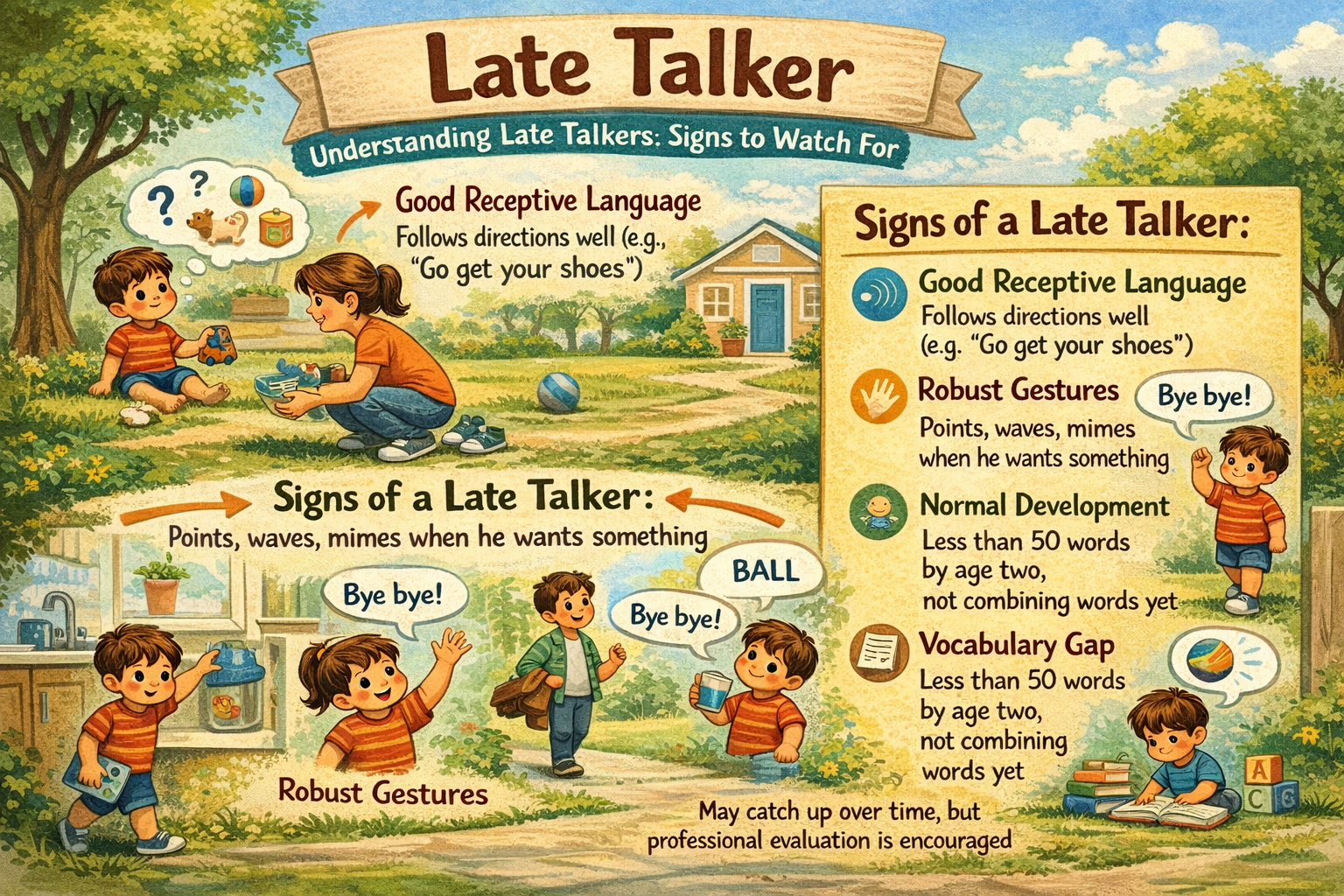
A “late talker” is a toddler (typically between 18 and 30 months) who has a good understanding of language and developing motor skills but has a limited spoken vocabulary.
Signs of a Late Talker:
-
Good Receptive Language: They follow directions well (e.g., “Go get your shoes”).
-
Robust Gestures: They use pointing, waving, and miming to get their point across.
-
Normal Development: They are meeting other milestones, like walking and playing, on schedule.
-
Vocabulary Gap: They typically have fewer than 50 words by age two and aren’t yet combining words into phrases.
Many late talkers eventually “catch up” to their peers, but it is impossible to predict which children will do so without a professional evaluation.
What is a Speech Delay?
A speech delay is a broader term. It suggests that a child isn’t developing speech at the expected age, but it may also involve challenges in how they process language or interact socially. Unlike a late talker, a child with a speech delay might struggle with receptive language (understanding what is said) or expressive language (using words and gestures).
Signs of a Speech Delay:
-
Difficulty Following Directions: They may seem “tuned out” or unable to follow simple commands.
-
Limited Gestures: They don’t use non-verbal communication, like pointing, to bridge the gap.
-
Frustration: Significant behavioral outbursts because they cannot communicate their needs.
-
Sound Errors: They may use only a few vowel sounds or omit consonants entirely.
Key Differences to Watch For
The primary difference lies in comprehension and non-verbal communication. A late talker usually understands the world around them and finds creative ways to communicate without words. They might lead you to the fridge and point to the milk.
In contrast, a child with a speech delay may struggle to understand your requests and might not use gestures to compensate for their lack of words. They may also show less interest in social engagement or imitation, which are critical building blocks for language.
When to Seek Help
The “wait and see” approach is becoming outdated in the world of early childhood development. The brain is most adaptable during the first three years of life.
Consult a Speech-Language Pathologist (SLP) if your child:
-
By 12 months: Doesn’t use gestures like pointing or waving.
-
By 18 months: Prefers gestures over vocalizations or has trouble imitating sounds.
-
By 24 months: Can’t follow simple instructions or has a vocabulary of fewer than 50 words.
What to Do Next: 3 Actionable Steps
If you are concerned, don’t panic. There are clear paths forward to ensure your child gets the support they need.
-
Get a Hearing Test: Sometimes, what looks like a speech delay is actually a hearing issue. Even minor fluid buildup in the ear can muffle sound and delay speech development.
-
Request an Evaluation: In the United States, every state offers Early Intervention (EI) services. These are often free or low-cost evaluations for children under age three. You do not need a doctor’s referral to call your local EI office.
-
Narrate Your Day: While waiting for an appointment, become a “sportscaster.” Describe everything you are doing: “I am washing the blue cup. Now I am drying the cup.” This constant exposure to language helps build their mental dictionary.
The Bottom Line
Whether your child is a “late bloomer” or has a clinical speech delay, early intervention is the gold standard. Addressing communication hurdles early doesn’t just help with talking—it builds the foundation for reading, social confidence, and long-term academic success.