The excitement of seeing a positive pregnancy test is usually followed by a flurry of nursery planning and name picking. But once the initial magic settles, a more practical reality sets in: the financial impact. Most parents-to-be prepare for the “big” things—the crib, the stroller, and the car seat. However, the first year of parenthood is often defined by the “invisible” costs that don’t show up on a standard baby shower registry.
Understanding the true cost of a baby’s first year requires looking beyond the plywood and fabric of nursery furniture. From fluctuating utility bills to the high price of convenience, here is a breakdown of the expenses that often catch new parents off guard.
The One-Time Essentials and the “Upgrade” Trap
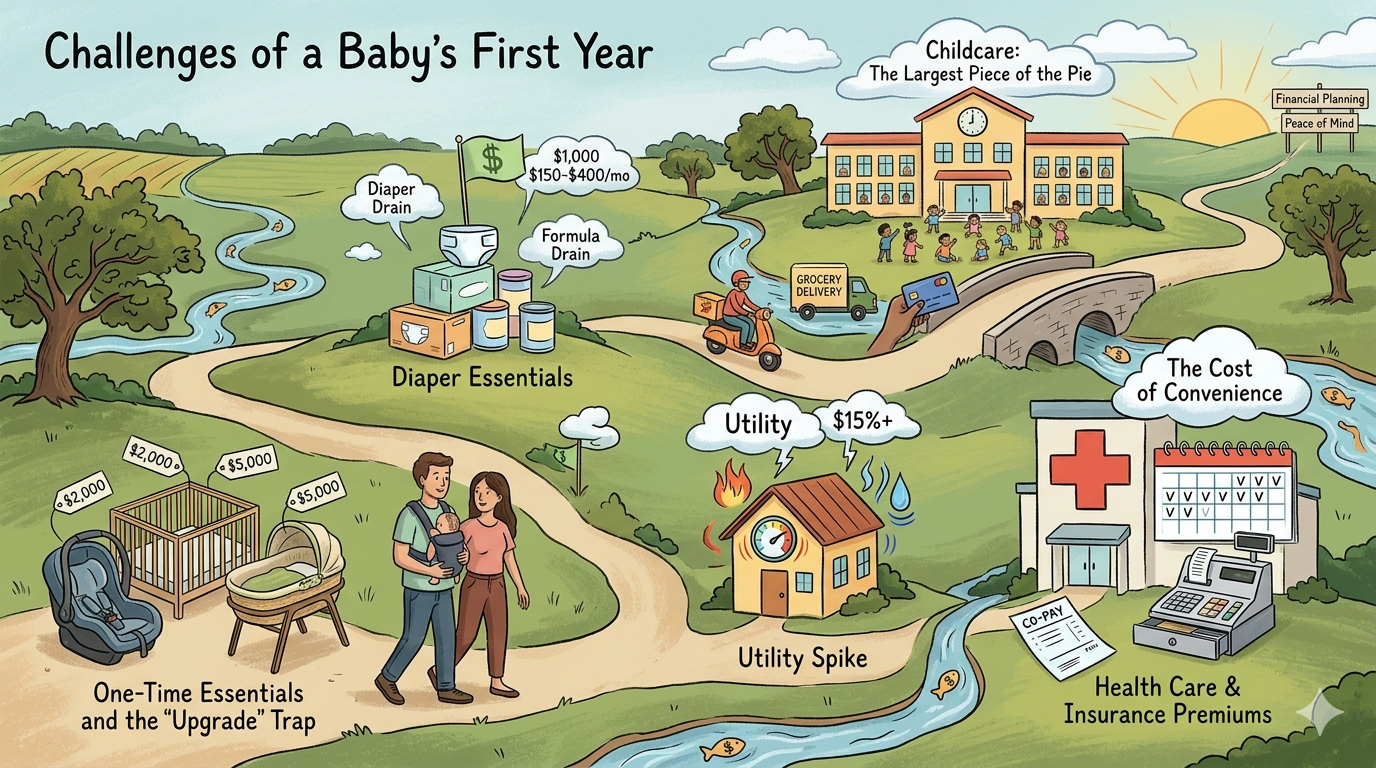
Before the baby even arrives, most households spend between $2,000 and $5,000 on gear. While you can save significantly by buying secondhand, many parents fall into the trap of the “safety upgrade.” This is the psychological urge to buy the most expensive, tech-heavy monitor or the organic, hand-woven bassinet because it feels like the “best” for the baby. These one-time costs are significant, but they are predictable. The real challenge lies in the recurring monthly outflows.
The Diaper and Formula Drain
If you aren’t breastfeeding, formula can easily become your largest monthly expense, ranging from $150 to $400 depending on the brand and any specific dietary needs. Even for breastfeeding parents, there are costs for pumps, storage bags, and lactation support.
Diapers and wipes are the next major hurdle. A newborn can go through ten to twelve diapers a day. Over twelve months, you can expect to spend approximately $1,000 on diapering alone. While cloth diapering is an option to save money in the long run, it requires a higher upfront investment and increases your home’s water and electricity usage.
The Utility Spike
This is the hidden cost almost nobody mentions. When a baby arrives, your home environment changes. You are likely running the heater or air conditioner more consistently to maintain a safe temperature for the infant. You are doing laundry almost every day to keep up with spit-up and blowouts. You are running the dishwasher more frequently to sterilize bottles. Many parents see their monthly utility bills jump by 15% to 25% during that first year.
Health Care and Insurance Premiums
Even with good insurance, the “well-baby” visits add up. While many preventative visits are covered, any unexpected illness, rash, or ear infection results in a co-pay. Furthermore, adding a dependent to your health insurance plan often leads to a significant increase in your monthly premium, which can take a large bite out of your take-home pay.
The Cost of Convenience
The “exhaustion tax” is very real. In the first six months, when sleep is a luxury, your spending habits will likely shift toward convenience. This might mean more food delivery because you’re too tired to cook, grocery delivery fees to avoid a trip to the store with a crying infant, or buying pre-washed and pre-cut produce. While these choices preserve your mental health, they can add hundreds of dollars to your monthly spending.
Childcare: The Largest Piece of the Pie
For working parents, childcare is often the most staggering expense. Depending on your location, daycare can cost as much as a second mortgage. Even if one parent stays home, there is the “opportunity cost” of a lost income and the potential impact on future career earnings.
How to Prepare
The best way to handle these costs is to start a “dry run” of your baby budget while you are still pregnant. Take the estimated cost of childcare and diapers and put that money into a savings account each month. Not only will this build a healthy emergency fund, but it will also help you adjust to living on a tighter budget before the baby—and the stress—actually arrives. Planning for the “invisible” costs now ensures you can focus on the joy of your new arrival later.