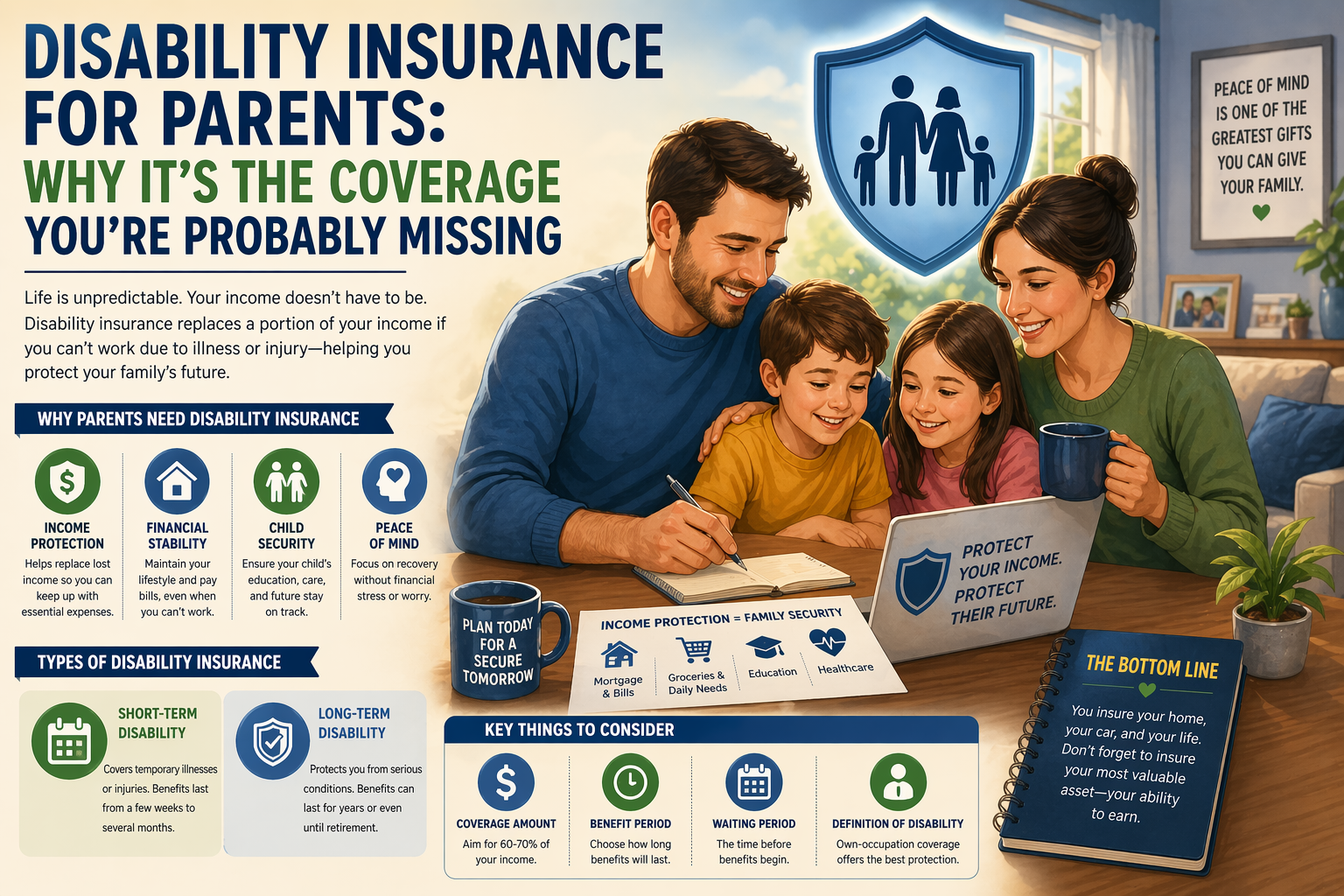
When parents think about protecting their families financially, life insurance is often the first solution that comes to mind. While it’s an essential safety net, there’s another type of coverage that is just as important—yet frequently overlooked: disability insurance. For parents, this protection can be the difference between financial stability and long-term hardship if the unexpected happens.
What Is Disability Insurance?
Disability insurance provides income replacement if you’re unable to work due to illness or injury. Unlike life insurance, which pays out after death, disability insurance supports you while you’re still alive but unable to earn a living. This distinction is critical, especially for parents who rely on their income to support daily household expenses, education costs, and future savings.
Why Parents Need Disability Insurance
As a parent, your ability to earn an income is one of your most valuable assets. If that income suddenly stops due to a disability, your family may struggle to cover essential costs such as rent or mortgage payments, groceries, utilities, and childcare.
Many people assume that disabilities are rare or only happen in extreme situations. In reality, temporary or long-term disabilities can arise from common issues like back injuries, chronic illnesses, or mental health conditions. Even a few months without income can significantly impact your family’s financial security.
The Hidden Risk of Being Underinsured
One of the biggest mistakes parents make is relying solely on employer-provided coverage or government benefits. While these can offer some support, they are often limited and may not fully cover your living expenses.
Employer disability plans typically replace only a portion of your income and may have strict limitations. Government programs can also be difficult to qualify for and may not provide enough financial support to maintain your current lifestyle.
Without adequate coverage, families may be forced to dip into savings, take on debt, or make major lifestyle changes during an already stressful time.
Stay-at-Home Parents Need Coverage Too
Disability insurance isn’t just for working parents. Stay-at-home parents provide essential services such as childcare, cooking, and household management. If they become unable to perform these duties, the cost of hiring help can add up quickly.
Having disability coverage—or a financial plan that accounts for these risks—can help ensure the family continues to function smoothly even if one parent is unable to contribute in their usual way.
How to Choose the Right Policy
When selecting disability insurance, parents should consider several key factors:
- Coverage Amount: Ideally, your policy should replace 60–70% of your income.
- Benefit Period: Look for policies that provide long-term coverage, especially for serious conditions.
- Waiting Period: This is how long you must wait before benefits begin. A shorter waiting period provides quicker financial relief.
- Definition of Disability: Some policies only pay if you can’t work any job, while others cover you if you can’t perform your specific profession.
Customizing your policy based on your family’s needs ensures you’re adequately protected.
Peace of Mind for the Future
Parenthood comes with countless responsibilities, and financial protection should be at the top of the list. Disability insurance may not be as widely discussed as life insurance, but its importance cannot be overstated.
By securing the right coverage, you’re not just protecting your income—you’re safeguarding your family’s lifestyle, stability, and future. In a world full of uncertainties, having a solid disability insurance plan ensures that even if life takes an unexpected turn, your family will be prepared.
Final Thoughts
Disability insurance is one of the most overlooked yet crucial components of a comprehensive financial plan for parents. If you haven’t considered it yet, now is the time to explore your options and close this critical gap in your coverage.
Because when it comes to protecting your family, being prepared for the unexpected isn’t optional—it’s essential.