When families go through separation or divorce, one of the most emotional and complex issues is child custody. Understanding your rights early can make a significant difference in protecting your relationship with your child and ensuring their well-being. This guide breaks down the essentials of child custody so every parent can make informed decisions before it’s too late.
What Is Child Custody?
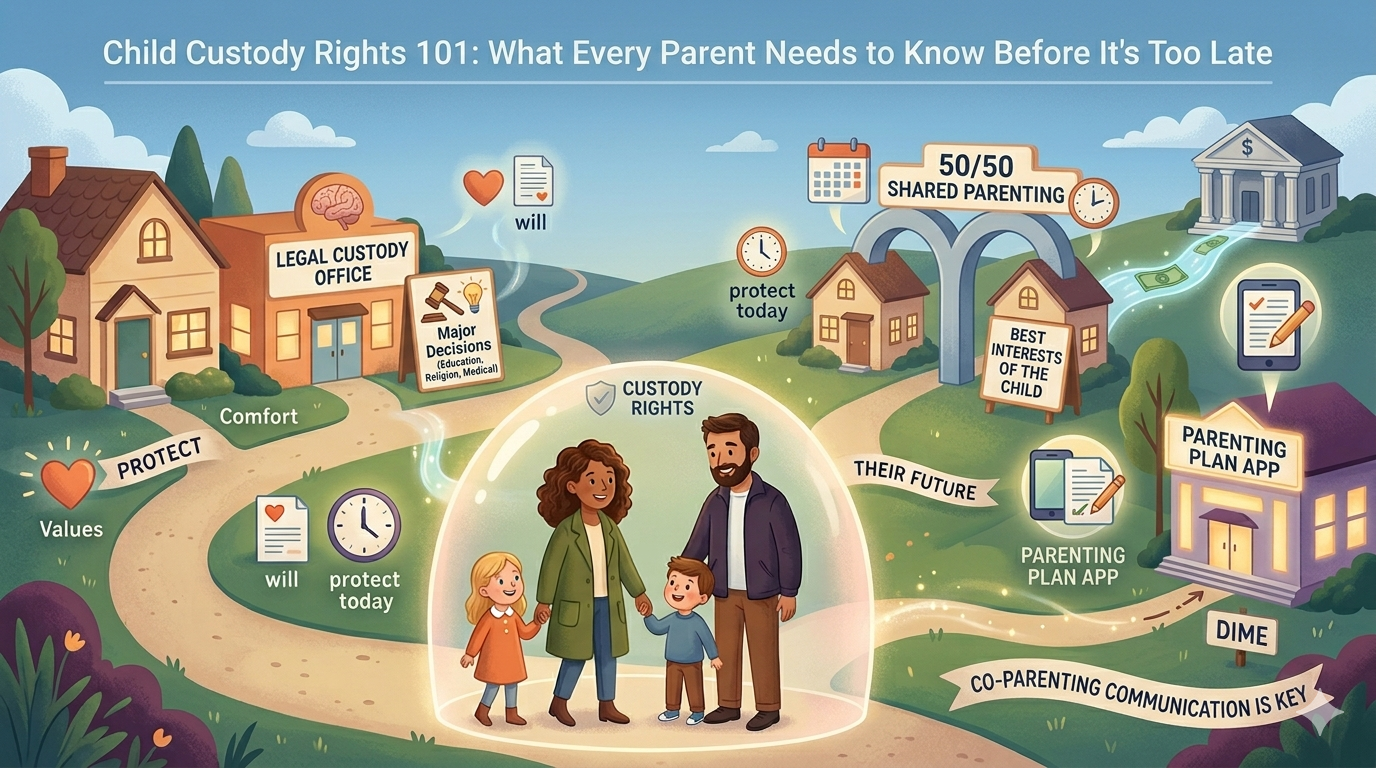
Child custody refers to the legal rights and responsibilities a parent has toward their child. It typically includes two main components: legal custody and physical custody.
- Legal custody gives a parent the authority to make important decisions about the child’s life, such as education, healthcare, and religion.
- Physical custody determines where the child lives and which parent handles day-to-day care.
Custody can be awarded solely to one parent or shared between both, depending on what the court believes is in the child’s best interests.
Types of Custody Arrangements
Courts usually consider several custody arrangements:
- Sole Custody: One parent has full legal and/or physical custody.
- Joint Custody: Both parents share responsibilities. This can be joint legal, joint physical, or both.
- Split Custody: Rare, but possible when there are multiple children, and each parent has custody of different children.
Joint custody is increasingly common because courts generally prefer children to maintain relationships with both parents.
How Courts Decide Custody
The primary factor courts consider is the best interests of the child. While laws vary by country and region, common factors include:
- The child’s age and emotional needs
- Each parent’s ability to provide stability
- The child’s relationship with each parent
- Financial and living conditions
- Any history of abuse or neglect
It’s important to understand that custody decisions are not about rewarding or punishing parents—they are about ensuring a safe, supportive environment for the child.
Why Acting Early Matters
Many parents make the mistake of waiting too long to understand their rights. This can lead to unfavorable custody arrangements that are difficult to change later.
Taking early action helps you:
- Gather important documentation (communication records, financial info, etc.)
- Establish a consistent parenting routine
- Demonstrate involvement in your child’s life
- Seek legal advice before conflicts escalate
Being proactive shows the court that you are committed and responsible.
The Importance of Parenting Plans
A parenting plan is a written agreement that outlines how parents will raise their child after separation. It typically includes:
- Visitation schedules
- Holiday arrangements
- Decision-making responsibilities
- Communication guidelines
Having a clear parenting plan reduces misunderstandings and helps create stability for the child.
Common Mistakes to Avoid
Parents often make emotional decisions during custody disputes. Avoid these common pitfalls:
- Using the child as leverage: This can harm your case and your child’s emotional health.
- Ignoring court orders: Non-compliance can lead to legal consequences.
- Speaking negatively about the other parent: Courts value cooperation and maturity.
- Lack of documentation: Keep records of your involvement and any relevant incidents.
When to Seek Legal Help
If you’re unsure about your rights or facing a dispute, consulting a family law professional is crucial. A lawyer can help you understand local laws, prepare documents, and represent your interests effectively.
Final Thoughts
Child custody is one of the most important legal matters a parent may face. Understanding your rights, acting early, and focusing on your child’s best interests can significantly impact the outcome. While the process can be challenging, being informed and prepared ensures you’re in the best position to protect both your rights and your child’s future.
By taking the time to learn about custody laws now, you can avoid costly mistakes and make decisions that truly benefit your child in the long run.