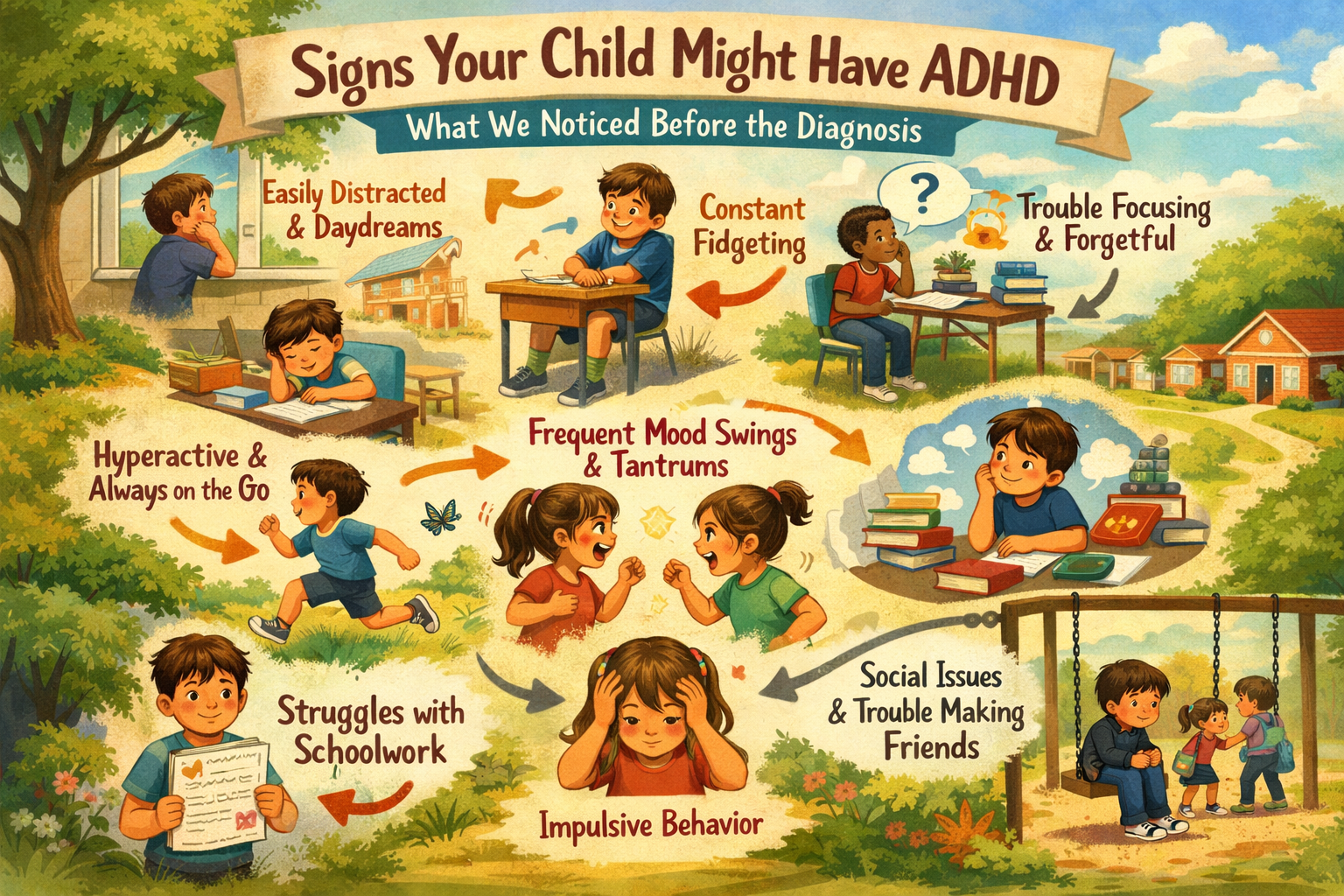
The journey toward an ADHD (Attention-Deficit/Hyperactivity Disorder) diagnosis often begins long before a doctor’s appointment. For many parents, it starts with a series of “small things” that don’t quite fit the typical developmental narrative. While every child is unique, looking back at the early years often reveals a pattern of behaviors that were more than just “kids being kids.”
If you are currently wondering if your child’s energy levels or focus issues are part of something bigger, you are not alone. Here is a look at the common signs noticed by parents before receiving an official ADHD diagnosis.
1. The “Motor” That Never Shuts Off
Hyperactivity is the most visible sign of ADHD, but it is often misunderstood. Parents frequently describe their children as being “driven by a motor.” Before a diagnosis, this might look like:
-
Inability to sit through a five-minute meal.
-
Fidgeting, squirming, or leaving their seat in situations where staying seated is expected.
-
Excessive running or climbing, even when it’s dangerous or inappropriate.
While many toddlers are energetic, children with ADHD often seem unable to regulate that energy, even when they are clearly exhausted.
2. Difficulty Following Multi-Step Instructions
One of the most frustrating early signs for parents is the “selective hearing” that isn’t actually selective. If you ask your child to “Go upstairs, put on your pajamas, and bring down your dirty laundry,” and you find them ten minutes later playing with Legos—still in their day clothes—it might be a sign of Executive Functioning challenges.
Children with ADHD often struggle to hold multiple pieces of information in their mind at once. They don’t mean to be defiant; they simply “lost the thread” of the instruction after the first step.
3. Hyperfocus vs. No Focus
A common myth is that children with ADHD can never focus. In reality, many parents notice the opposite: hyperfocus.
A child might spend three hours perfectly focused on a video game or a specific art project but cannot focus for thirty seconds on brushing their teeth. This inconsistency is a major hallmark of ADHD. It isn’t a lack of attention, but rather a difficulty in regulating where that attention goes.
4. Emotional Dysregulation and “Big Feelings”
ADHD is not just about focus and movement; it is deeply tied to how a child processes emotions. Before a diagnosis, parents often notice that their child’s reactions seem “out of scale” with the situation.
-
Low frustration tolerance: A small mistake on a drawing leads to a total meltdown.
-
Impulsivity: Shouting out answers in class or interrupting others because the thought “must” come out immediately.
-
Sensitivity: Feeling deeply hurt by minor social slights.
5. The “Messy” Executive
As children reach school age, the demands on their organization increase. Parents of children with ADHD often notice:
-
Chronic loss of items (water bottles, hoodies, homework).
-
A desk or backpack that looks like a “black hole.”
-
Difficulty transitioning from one activity to another without a struggle.
Why Early Observation Matters
Noticing these signs isn’t about “labeling” your child; it’s about understanding how their brain works. ADHD is a neurodevelopmental condition, not a result of “bad parenting” or a lack of discipline.
If these patterns feel familiar, the best next step is to consult with a pediatrician or a child psychologist. Early intervention—whether through behavioral therapy, school accommodations, or lifestyle changes—can make a world of difference in a child’s self-esteem and academic success.
Final Thoughts
Every child has “off” days, but ADHD is characterized by a persistent pattern of these behaviors that impacts their daily life. Trust your intuition. If you feel like your child is struggling more than their peers to manage the basics of their day, it is worth seeking a professional perspective. Understanding the “why” behind the behavior is the first step toward helping your child thrive.