We’ve all been there: standing in the middle of a brightly lit grocery aisle, staring at a receipt that feels more like a mortgage payment than a weekly food run. In 2026, with the cost of living demanding more precision from our wallets, the “grocery trip” has become a source of significant financial stress for families.
Last year, our family was spending upwards of $1,200 a month on groceries and household essentials. We tried the coupons, we bought the generic brands, and we shopped the sales, but the needle barely moved. Then, we implemented one simple, psychological shift that changed everything. We didn’t just save a few dollars—we slashed our monthly bill by $400.
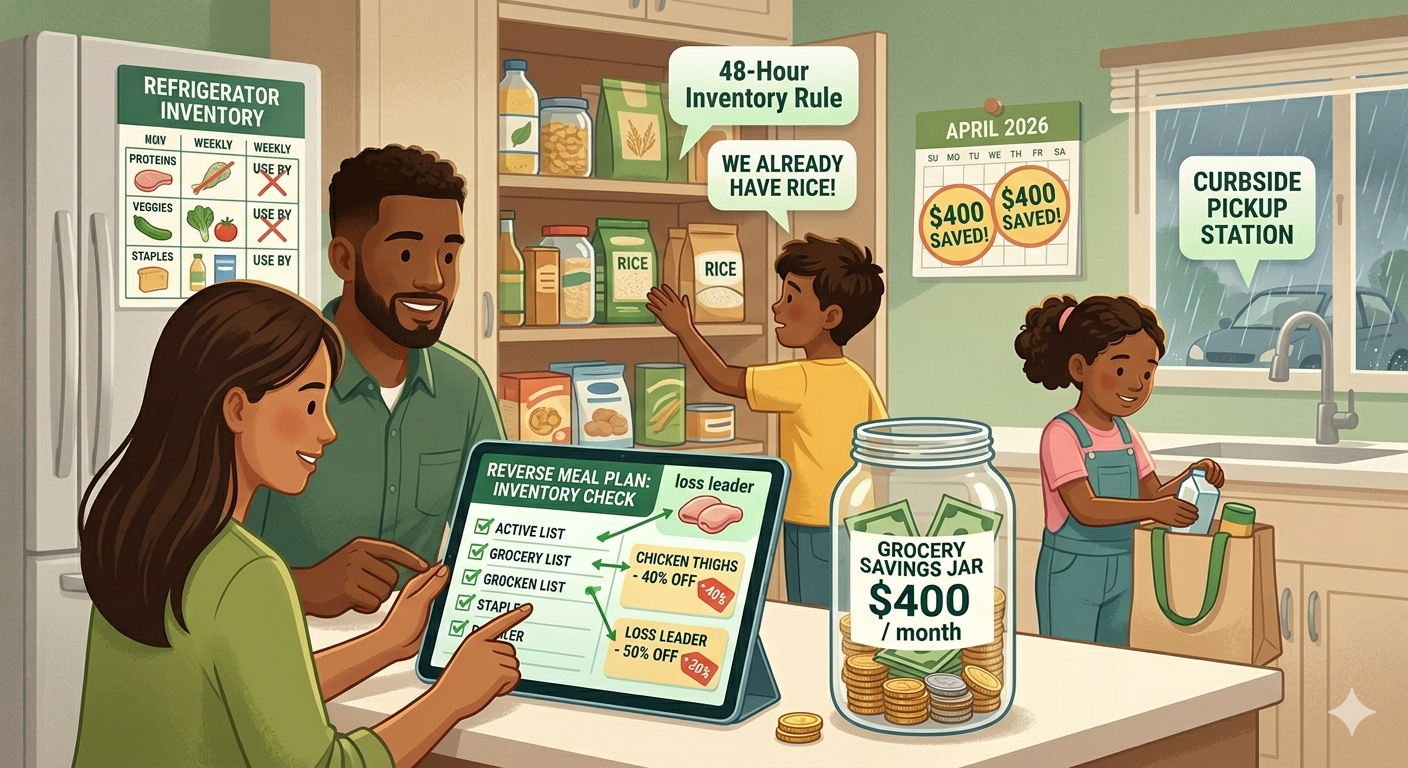
The trick? The “Reverse Meal Plan” combined with the 48-Hour Inventory Rule.
What is Reverse Meal Planning?
Standard meal planning usually looks like this: You find a recipe, write down the ingredients, and go to the store to buy them. The problem? You’re paying full price for whatever those specific recipes demand.
Reverse Meal Planning flips the script. Instead of starting with a recipe, you start with what is already in your kitchen and what is currently on deep discount at the store.
Step 1: The 48-Hour Inventory Rule
Before you even think about a shopping list, spend 10 minutes performing a “Kitchen Audit.” We realized we were spending $50 a week on items we already had buried in the back of the pantry or the bottom of the freezer.
-
The Rule: You cannot buy a “base” ingredient (pasta, rice, frozen proteins) unless you have physically touched the back of your pantry shelf to confirm you are out.
Step 2: Shop the “Loss Leaders” First
Every grocery store has “loss leaders”—items they sell at a loss to get you into the store (think seasonal produce or bulk meats). In 2026, most stores offer these through their apps. We now build our meals around these sales. If chicken thighs are 40% off, we’re having chicken three ways this week.
The “Shop From Home” Barrier
The second half of our $400-a-month trick involves a change in how we shop. We transitioned almost exclusively to Curbside Pickup.
While some worry about the small convenience fee, it saved us hundreds in impulse buys. Physical grocery stores are designed by psychologists to make you spend. The smell of the bakery, the “limited time” endcaps, and the candy at the checkout are all traps. By shopping via an app, we:
-
See the total in real-time: If the cart hits $150 and our budget is $125, we can remove the “wants” before checking out.
-
Avoid “The Toddler Tax”: No more extra boxes of sugary cereal ending up in the cart because a child grabbed them.
-
Search by “Unit Price”: The app makes it easy to sort by the lowest price per ounce, ensuring we always get the best value.
The Result: $4,800 a Year in Savings
By implementing the Reverse Meal Plan and sticking to curbside pickup, our bill dropped from $300 a week to roughly $200. That extra $400 a month went straight into our high-yield savings account, funding our entire summer vacation.
Quick Tips to Start Today:
-
Theme Nights: Keep it simple. “Taco Tuesday” or “Pasta Thursday” allows you to use pantry staples consistently.
-
The “One In, One Out” Produce Rule: Don’t buy new veggies until the crisper drawer is empty. This eliminates the “salad rot” that wastes billions of dollars annually.
-
Shop Your Freezer: Once a month, have a “Freezer Week” where you buy nothing but fresh milk and eggs, forcing your family to eat what you’ve already paid for.
Building a budget that works doesn’t require deprivation—it just requires a better system. By starting in your pantry instead of the store aisle, you can reclaim your family’s finances one meal at a time.