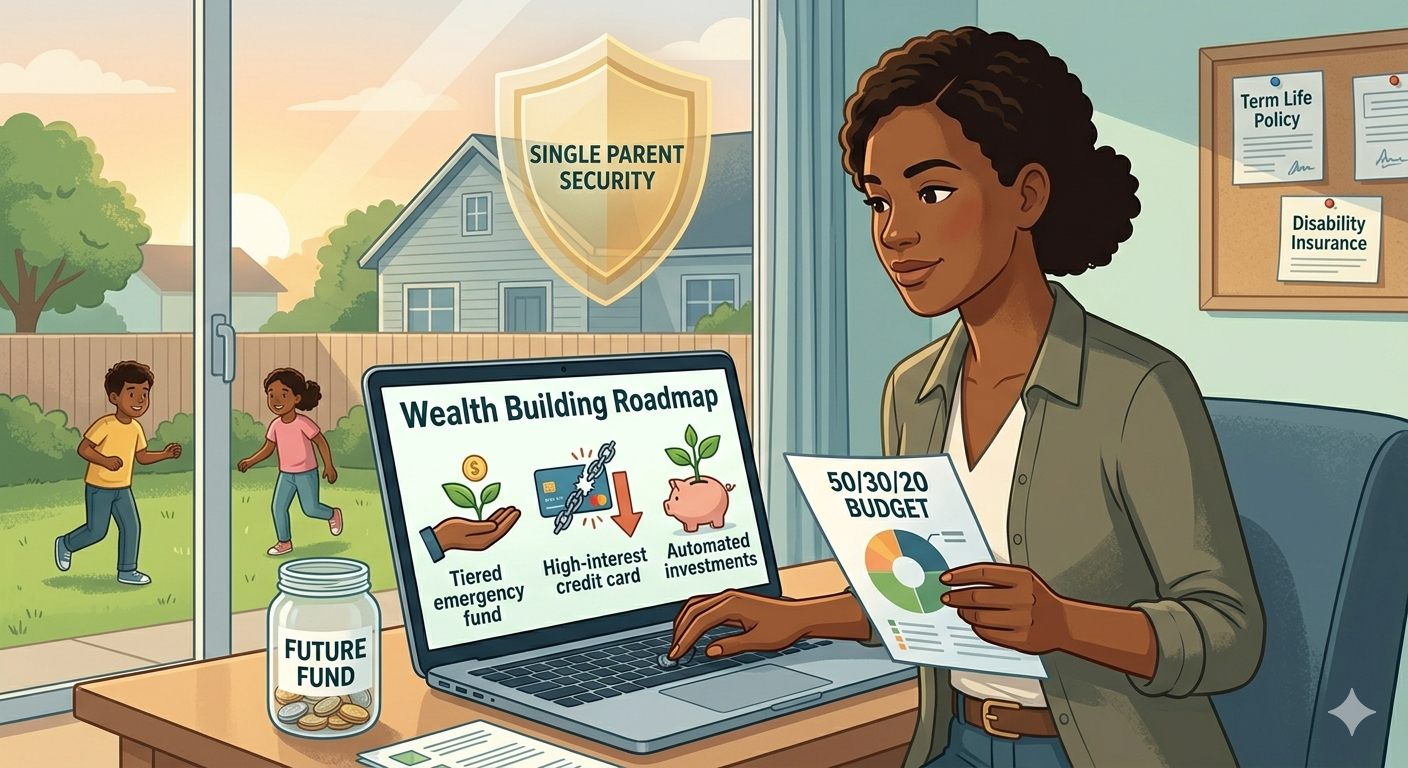
Building wealth as a single parent can often feel like trying to run a marathon while carrying a backpack full of rocks. Between rising childcare costs, housing, and the daily expenses of raising a family, the idea of “wealth building” might seem like a luxury reserved for two-income households.
However, wealth isn’t about how much you make; it’s about how much you keep and how hard that money works for you. In 2026, new digital tools and flexible investment options have made it more accessible than ever to build a legacy on a single salary. Here is a realistic, step-by-step roadmap to financial independence.
1. Radical Budgeting: The 50/30/20 Rule
When you are the sole provider, every dollar needs a job. The most effective framework for single-income households is the 50/30/20 rule, adjusted for your reality.
-
50% for Needs: Housing, utilities, groceries, and childcare.
-
30% for Wants: Subscriptions, dining out, and hobbies.
-
20% for Financial Goals: This is your wealth-building engine (debt repayment, emergency fund, and investments).
If your “Needs” exceed 50%, don’t panic. The goal is progress, not perfection. Look for “fixed cost” leaks—like high-interest car loans or underused insurance policies—that can be refinanced to free up cash.
2. The Fortress: A Tiered Emergency Fund
For a single parent, an emergency fund isn’t just a suggestion; it’s your insurance policy against the unknown. Since you don’t have a partner’s income to fall back on, aim for a tiered approach:
-
Starter Fund: Save $2,000 as quickly as possible to cover immediate repairs.
-
The Runway: Gradually build toward 6 months of essential living expenses in a High-Yield Savings Account (HYSA).
3. Mastering “Good” vs. “Bad” Debt
Debt is the biggest obstacle to wealth. High-interest credit card debt (usually 20%+) is an emergency that needs to be extinguished immediately. However, student loans or a modest mortgage can be managed strategically.
The Debt Snowball vs. Avalanche:
-
Snowball: Pay off the smallest balance first for a psychological win.
-
Avalanche: Pay off the highest interest rate first to save the most money over time.
4. Investing for the Future (Even with Small Amounts)
You don’t need thousands of dollars to start investing. In 2026, fractional shares and “micro-investing” apps allow you to buy into the stock market with as little as $5.
-
Capture the Match: If your employer offers a 401(k) match, contribute enough to get it. That is a 100% return on your investment instantly.
-
The Roth IRA: This is a powerful tool for single parents. Because you’ve already paid taxes on the money you put in, you can withdraw your contributions (not earnings) penalty-free if a true emergency arises, providing a secondary safety net.
-
Index Funds: Instead of picking individual stocks, buy “the whole market” through low-cost S&P 500 index funds.
5. Strategic Protection: Life and Disability Insurance
Wealth building is a long game, and as a single parent, you are the most valuable asset.
-
Term Life Insurance: Ensure you have a policy that covers at least 10x your annual income. This ensures your children are provided for if the unthinkable happens.
-
Disability Insurance: This protects your ability to earn an income if you become ill or injured.
6. Automate Everything
Decision fatigue is real for single parents. Remove the temptation to spend by automating your savings and investment contributions. If the money moves to your brokerage account the same day your paycheck hits, you’ll learn to live on what’s left.
Conclusion
Building wealth on one income requires discipline, but it is entirely possible. By focusing on high-impact habits—eliminating high-interest debt, automating investments, and protecting your income—you aren’t just surviving; you are creating a foundation of freedom for yourself and your children.